
Manhattan, NYC
Pain Relief Acupuncture — Holistic Pain Management
Living with chronic pain? Our Manhattan acupuncture clinic specializes in natural pain management. Experience lasting relief without drugs or surgery through proven Traditional Chinese Medicine techniques.
What is Pain Relief Acupuncture?
Pain relief acupuncture treats chronic and acute pain by stimulating the body's own painkilling systems instead of adding a drug. Sessions run 45–60 minutes after a 20 minute intake. Of the complementary approaches NCCIH reviewed, acupuncture was the only one with evidence it could reduce a patient's need for opioids.
Clinic facts
- Rating
- 5.0 / 5 · 23 Google reviews
- Experience
- 15+ years · 2 licensed L.Ac.
- First visit
- 75 minutes
- Follow-up
- 45–60 minutes
- Address
- 408 West 57th Street, Suite 1K, New York, NY 10019
- Hours
- Mon–Fri 9am–7pm · Sat 9am–5pm
- Phone
- (212) 265-2052 · text (347) 875-2805
- Languages
- English · 中文
How Acupuncture Relieves Pain
Chronic pain rewires more than the body. It rewires the calendar, the sleep, the mood, the small choices about what you'll say yes to this week. By the time most people come in for pain relief acupuncture in Manhattan, they've already tried the obvious ladder — Advil, prescription anti-inflammatories, muscle relaxants, possibly gabapentin or a short course of opioids — and they're tired of the side effects and the side-effect-cascade. The pain is still there, just now with daytime drowsiness, GI upset, and the quiet fear of taking another pill.
Chronic pain acupuncture works on the layers conventional pain medicine often leaves alone. The nervous-system layer — calming the sympathetic overdrive that turns acute injury into chronic pain. The local-tissue layer — releasing trigger points, reducing inflammation around joints and nerve roots, restoring blood flow. And the TCM systemic layer — the kidney-yang depletion in patients who feel worse with cold and fatigue, the qi-blood stasis pattern that locks pain into a region after an old injury, the liver-qi stagnation pattern that ties pain tightly to stress. We work all three, in one session, with whichever combination of acupuncture, electroacupuncture, cupping, and Tui Na fits what you walked in with.
Our Midtown Manhattan clinic on West 57th Street — near Columbus Circle, between 9th and 10th Avenue — sees pain of every variety: chronic low back pain, sciatica, frozen shoulder, runner's knee, carpal tunnel, jaw pain from TMJ, post-surgical neuropathic pain that won't quit, fibromyalgia flares, the diffuse aches that nobody can quite name. We treat office workers, ER nurses, retired teachers, postpartum parents, marathon trainees, jazz musicians whose hands have to keep working. Some come once a week for two months and stabilize. Some come monthly for years as maintenance. Both are reasonable. Acupuncture is recommended by the American College of Physicians as a first-line treatment for chronic low back pain, and NIH-funded research continues to build evidence for other pain conditions.
Inside the Treatment Room
Conditions We Treat
Chronic back & neck pain
The largest single category of pain we treat — desk-worker patterns, post-injury patterns, and the mixed cases where it's both.
Arthritis & joint pain (knee, hip, hand)
Osteoarthritis pain that's not yet at the joint-replacement threshold — acupuncture can meaningfully reduce daily pain and improve function.
Sciatica & nerve pain
Radiating pain from compressed lumbar nerve roots, piriformis syndrome, or peripheral neuropathic patterns.
Migraines & chronic headache
Episodic and chronic migraine, tension-type headache, cervicogenic headache from neck involvement.
Fibromyalgia & widespread pain
Widespread musculoskeletal pain with sleep, fatigue, and cognitive components. Responds to a slower, gentler treatment style.
Frozen shoulder & rotator cuff pain
Adhesive capsulitis and rotator cuff irritation — Dr. Yu treats frozen shoulder as a specialty area.
Carpal tunnel & repetitive-strain pain
Wrist, forearm, and elbow pain from keyboard, mouse, or instrument use. Often responds well before surgery becomes the next step.
TMJ & jaw pain
Jaw clenching, grinding, and TMJ pain — often paired with neck tension and headache. Acupuncture pairs well with dental occlusal care.
Post-surgical & post-injury pain
Pain that lingers after the surgical site or injury has technically healed. Often a neuropathic-myofascial mix.
Benefits
- · Drug-free pain relief — no GI upset, no daytime drowsiness, no risk of dependence
- · Reduces inflammation locally around irritated joints, nerve roots, and trigger points
- · Releases the specific muscles holding your pain — not generic 'tension'
- · Stimulates endorphin and enkephalin release for genuine, lasting pain relief
- · Restores blood flow and lymphatic drainage to areas that have been guarded too long
- · Calms the autonomic nervous system — the layer that turns acute pain into chronic pain
- · Improves sleep — chronic pain and poor sleep feed each other; we work on both
- · Works alongside any pain medication, PT, or specialist care — no drug interactions
- · Often reduces the dose of pain medication you need — a goal we're glad to work toward together
What to Expect
- 1
Pain intake & TCM assessment (20 min)
We start by asking what hurts, where exactly, when it started, what makes it better or worse, what you've already tried, and what medications and supplements you're currently taking. We check basic range of motion in the relevant region and palpate for trigger points and tender areas. Tongue and pulse follow. Then we explain the working diagnosis — both the musculoskeletal layer and the TCM pattern — in plain English (or Mandarin) before deciding the treatment approach with you.
- 2
Treatment session (45–60 min)
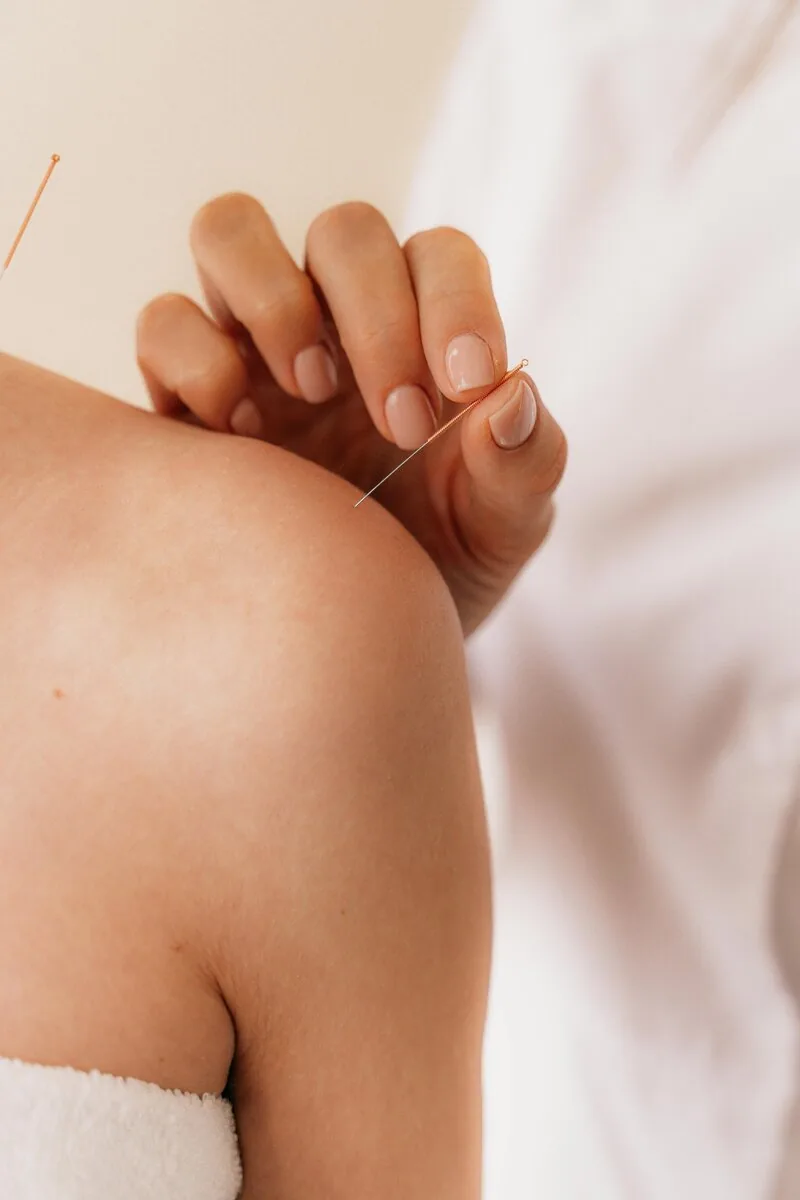
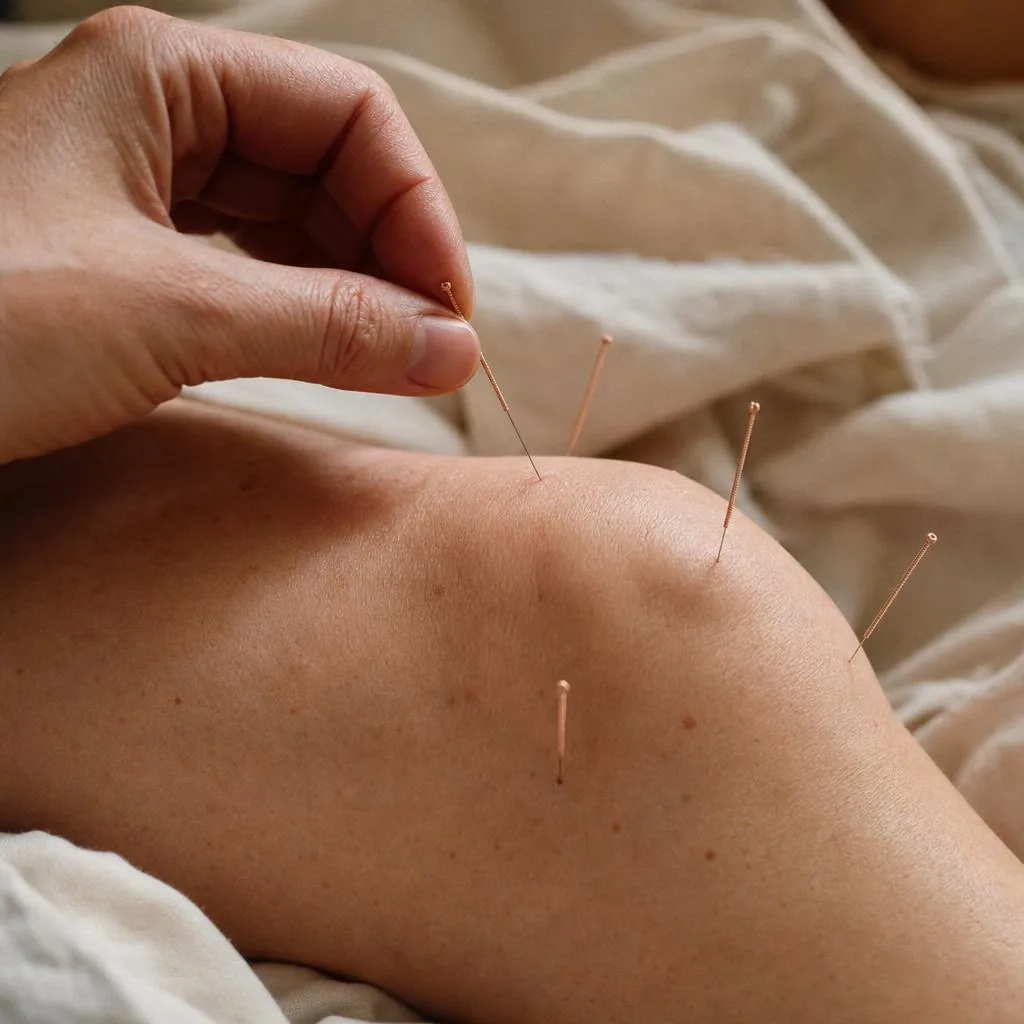
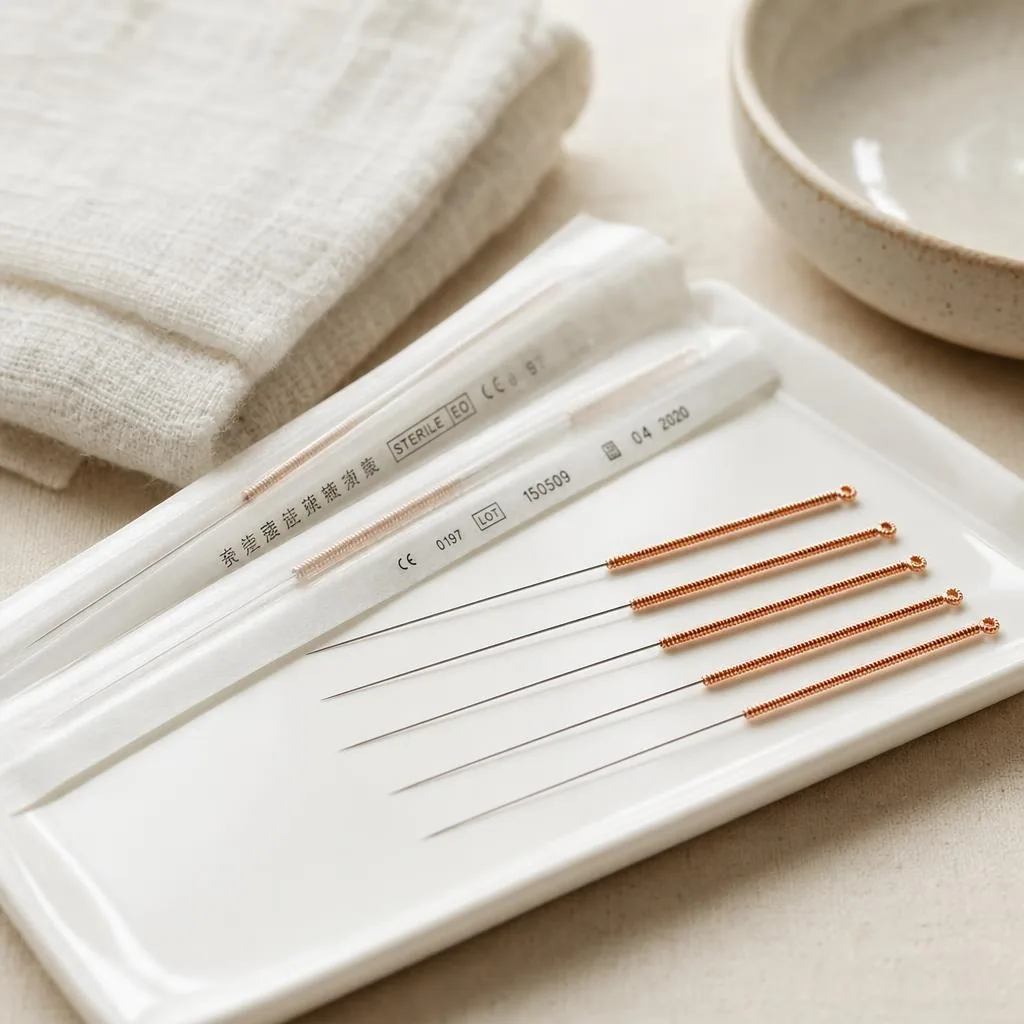
We use thin sterile single-use needles at the appropriate points for your condition — usually a mix of local points near the painful area and distal points on the hands, feet, or ears that balance the treatment. For most chronic pain we add gentle electroacupuncture across two needles for deeper effect. Cupping or Tui Na is added in the same hour when myofascial tightness is part of the picture. You rest with the needles in for 25–30 minutes; most people fall asleep, which is itself part of the nervous-system reset.
- 3
Aftercare & next 24 hours
Get up slowly, drink some water. For the next 24 hours: keep moving (don't go straight to bed), no ice on the area we treated, warm shower is fine, skip the hardest workout of your week. Mild soreness for a day after deeper work is normal — like the day after a moderate workout. We'll often send you out with one or two simple stretches or self-care points to press at home.
- 4
Follow-up cadence & review
Acute pain (last few weeks) usually needs 3–6 visits. Chronic pain of months or years usually needs 8–12 visits before the new baseline is reliable, often with a maintenance visit every 3–4 weeks afterward. We review every 4 visits — if nothing meaningful has changed by visit 6, we say so honestly and reconsider the plan, or refer you on to whoever is the better fit.
Pain Relief Acupuncture at a Glance
| What you want to know | Answer |
|---|---|
| Session structure | 20 minute pain intake and TCM assessment, then a 45–60 minute treatment with 25–30 minutes of needle retention. |
| Opioid-sparing evidence | Among acupuncture, yoga, relaxation, tai chi, massage and spinal manipulation, only acupuncture had evidence it could reduce a patient's need for opioids. |
| Insurance | Medicare covers up to 12 sessions per year for chronic low back pain. Bring your card and we will check your specific plan. |
| Effect size | NCCIH describes acupuncture's pain-relieving effect for back and neck pain as comparable to that of NSAIDs. |
Why choose Delight for pain relief
Pain — back, neck, shoulder, knee, headache, nerve — is the single most common reason patients come through our door. Both practitioners are experienced with it. Dr. Yu Qi, L.Ac. (MSTOM, 7+ years) has built her practice around acute and chronic pain including sciatica, low back pain, migraine, and facial paralysis. Dr. Xaoling Shang, L.Ac. (MSTOM, NCCAOM-certified, 15+ years) brings a broader internal-medicine view, which matters when pain is tangled up with sleep, stress, or hormonal patterns rather than purely mechanical. In one visit we can combine acupuncture, electroacupuncture, cupping, and Tui Na — which is unusual outside a dedicated TCM clinic and is one of the reasons patients with stubborn chronic pain end up here.
Both practitioners are NY-licensed and bilingual (English / 中文). We're comfortable coordinating with primary care, physical therapy, pain management, and orthopedics — and we keep notes you can share with those providers. We will tell you honestly when pain looks like it needs imaging, an injection consultation, or a surgical opinion that we cannot provide. Acupuncture is recommended by the American College of Physicians as a first-line treatment for chronic low back pain, and is one of the more conservative steps to try before escalating to procedures or long-term opioids.
Frequently Asked Questions
How many sessions until I feel meaningful pain relief?
Most patients feel some change within 3–6 visits, often as soon as the first or second. Acute pain (something that started in the last few weeks) usually settles fastest — frequently within 4–6 visits. Chronic pain of years sometimes needs 8–12 sessions before the new baseline is clear, often followed by a maintenance visit every few weeks. We review every 4 visits and adjust the plan together; if there is no meaningful change by visit 6, we say so honestly and reconsider the approach — or refer you on.
Can I keep taking my pain medication while doing acupuncture?
Yes. Acupuncture has no drug interaction with NSAIDs, muscle relaxants, gabapentinoids, opioids, or steroids. We will never ask you to stop a prescribed medication on your own. As your pain settles, the prescribing doctor may suggest reducing your medication — if so, we'll adjust our schedule to support that pace. Many patients use acupuncture specifically as a way to reduce their dependence on daily pain medication over time, which is a reasonable goal we're glad to work toward with you.
What kinds of pain does acupuncture not help with?
We are not the right call for pain that needs urgent surgical evaluation — sudden severe back pain with leg weakness or loss of bladder control, a fracture, a freshly torn ligament, or an undiagnosed mass. Pain from active cancer or post-surgical neuropathic pain can sometimes benefit, but we'd want to coordinate closely with your oncology or pain team rather than work in isolation. If we don't think acupuncture is the best tool for your situation, we'll say so directly at the first visit rather than book you for a course that's unlikely to help.
Does pain relief acupuncture actually hurt?
Acupuncture needles are about as thin as a strand of hair — completely different from the hollow needles used for blood draws or injections. You'll feel a brief pinch on insertion, sometimes a heavy or warm sensation around the point ('de qi' — usually means the point is doing what we want), and then nothing for the rest of the session. If a particular needle is genuinely uncomfortable, tell us and we'll adjust. Most patients are surprised by how relaxing the actual treatment is.
Does my insurance cover pain relief acupuncture?
Many do, especially for back pain. Medicare covers up to 12 sessions per year for chronic low back pain. Most commercial plans (Aetna, Cigna, BCBS, UnitedHealthcare) include acupuncture benefits with varying copays and visit limits. The simplest check: call the number on your insurance card. We're glad to provide a superbill you can submit for reimbursement if we're out-of-network for your plan.
Is acupuncture safe during pregnancy?
Yes, when done by a licensed practitioner who knows which points to avoid. We avoid a specific set of points contraindicated in pregnancy and position you side-lying or semi-reclined once your belly makes prone uncomfortable. Pregnancy-related back pain, pelvic pain, and sciatica all respond well. Tell us your trimester and any complications at booking. Dr. Shang has extensive experience with prenatal and postpartum acupuncture.
How quickly will I feel pain relief from acupuncture?
Many patients feel meaningfully looser walking out of the first session — often 20–30% better immediately. That initial relief commonly fades after a day or two as the body returns to its baseline; the cumulative, lasting change builds over the next 3–5 visits. Acute pain (last few weeks) tends to settle fastest. Chronic pain of years often takes 8–12 visits before the new baseline is reliable. A small group feels nothing the first session and meaningful change the second or third. We track progress carefully and adjust.
Can I exercise the same day as my pain relief acupuncture session?
Light activity is fine — a walk, easy yoga, your normal commute. We'd skip your hardest workout of the week on the day of a deeper session, especially if we used electroacupuncture or cupping. Give the treated tissue 24 hours to integrate. If you have a race or major training session within 48 hours, tell us at booking so we can keep the treatment conservative.
Research & references
Every clinical statement on this page traces back to one of these sources. They are U.S. federal health agencies and academic medical centers — not our own marketing.
NCCIH — Chronic Pain and Complementary Health Approaches
Among the approaches reviewed — acupuncture, yoga, relaxation, tai chi, massage and spinal manipulation — acupuncture was the only one with evidence that it could reduce a patient's need for opioids. The 2022 CDC opioid-prescribing guideline also lists acupuncture as appropriate for some types of chronic pain.
NCCIH — Acupuncture vs. sham and no-treatment controls
A 2018 review of 12 studies (8,003 participants) found acupuncture more effective than no treatment for back or neck pain, and 10 studies (1,963 participants) found it more effective than sham acupuncture. NCCIH describes the pain-relieving effect as comparable to that of NSAIDs.
NCCIH — Acupuncture: Effectiveness and Safety
Acupuncture has been in use for at least 2,500 years and, per WHO data, is practiced in 103 of 129 reporting countries. A pooled analysis of 20 studies (6,376 participants) found the benefit persisted for a year after treatment ended for every pain condition studied except neck pain.
Citations are summarized — please read the originals. This page is general health education, not medical advice for your specific case. Results vary, and acupuncture and Chinese medicine work best alongside, not instead of, care from your physician.
What Our Patients Say
5.0 · 23 Google reviews5.0 average across 23 verified Google reviews. Shown exactly as written.
★★★★★Amazing! After first acupuncture visit — major improvement. Added cupping and massage — results were immediate and I felt great relief from past pains. Thank you Dr. Shang.
★★★★★Highly recommended! Dr. Shang is a very skilled acupuncturist and I enjoy the treatment every time when I come here.
★★★★★Best acupuncture clinic in town! Dr. Shang is very professional and nice to everyone. I'm coming here regularly and feeling much better now!
Break Free from Chronic Pain
Schedule your pain evaluation today and take the first step toward a pain-free life.
Related Services
Back Pain Acupuncture — Natural Pain Relief
Suffering from back pain? Our Manhattan acupuncture clinic specializes in treating chronic back pain, lower back pain, and sciatica using proven Traditional Chinese Medicine techniques—without drugs or surgery.
Sciatica Acupuncture — Natural Sciatic Pain Relief
Don't let sciatica control your life. Our specialized acupuncture treatments target the root cause of sciatic nerve pain, providing lasting relief without drugs or surgery.
Sports Acupuncture — Injury Recovery & Performance
Train harder. Recover faster. Our Manhattan clinic offers specialized sports acupuncture for athletes of all levels—from weekend warriors to professionals. Get back in the game with proven Traditional Chinese Medicine techniques.