Manhattan, NYC
Cupping Therapy in Manhattan — Hands-on Relief for Back, Neck & Shoulder Tension
Cupping is one of the most-requested treatments at our 57th Street clinic. Dr. Xaoling Shang, L.Ac. (MSTOM, NCCAOM-certified, 15+ years in practice) uses both traditional fire cups and modern vacuum cups, choosing the method that fits your body and what you came in for.
What is Cupping Therapy?
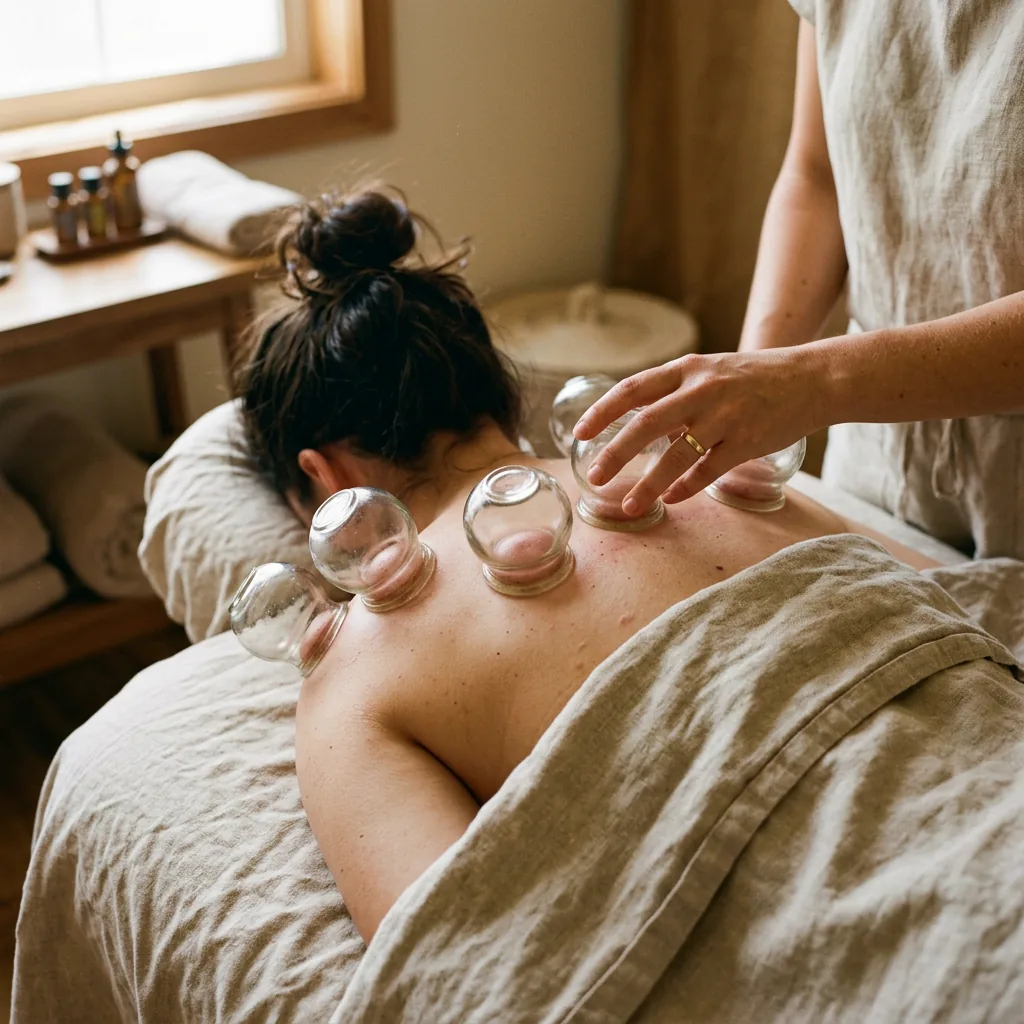
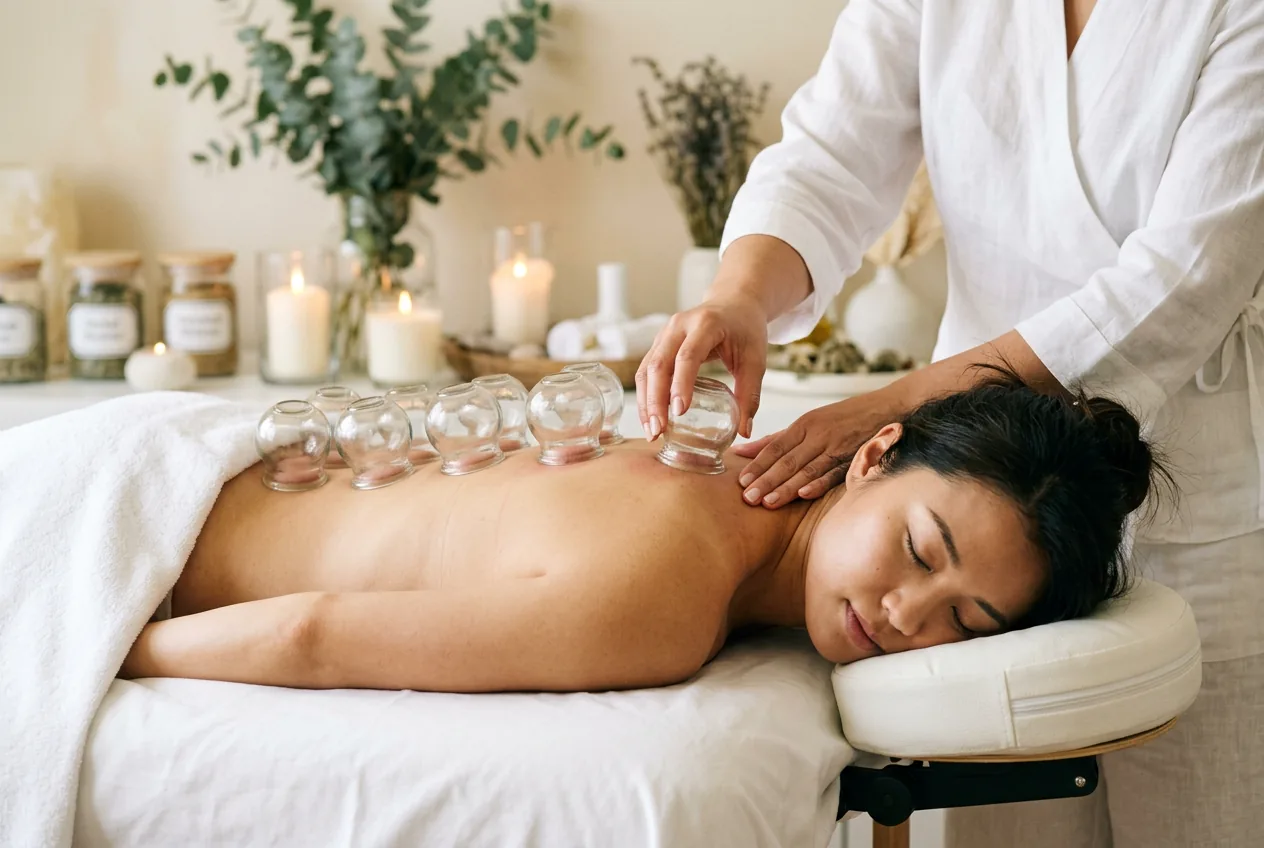
Cupping therapy uses suction cups to lift and decompress tight tissue, the opposite of the downward pressure of massage. Cups stay on for 5–15 minutes depending on how the tissue responds, after a 5–10 minute intake. The circular marks are expected, are not bruises in the injury sense, and fade over several days.
Clinic facts
- Rating
- 5.0 / 5 · 23 Google reviews
- Experience
- 15+ years · 2 licensed L.Ac.
- First visit
- 75 minutes
- Follow-up
- 45–60 minutes
- Address
- 408 West 57th Street, Suite 1K, New York, NY 10019
- Hours
- Mon–Fri 9am–7pm · Sat 9am–5pm
- Phone
- (212) 265-2052 · text (347) 875-2805
- Languages
- English · 中文
How Cupping Actually Works
Cupping has been documented in Chinese clinical texts for over 2,000 years and shows up even earlier in the Egyptian Ebers Papyrus (around 1550 BCE) and in Galen's writings from second-century Rome. The mechanism is mechanical and simple: a practitioner places glass or silicone cups on the skin and creates suction — with a brief flame to displace air in the case of fire cupping, or a hand pump for vacuum cups. The negative pressure lifts skin and superficial fascia away from the underlying muscle, decompresses connective tissue that has been gripping for weeks, and floods the area with fresh blood.
In our Midtown Manhattan practice cupping shows up most often for: desk-bound trapezius and rhomboid tension in finance and tech workers from Columbus Circle offices, post-marathon and post-lift soreness in runners training along the Hudson River Park, stubborn lower-back tightness in long commuters, post-cold lung tightness, and early-stage wind-cold patterns that have not yet turned into a full cold. We also use it for tight IT bands, plantar fascia (with small cups), and the shoulder-blade knots that show up after a tough swim. It is not a cure-all — but in the right body and the right spot, cupping does in 10 minutes what foam-rolling cannot.
Round red-purple marks that fade in 3-10 days are normal — they are pooled stagnant blood being released from tissue, not bruises in the impact sense. A real bruise is tender when pressed; cupping marks are not. The color of the mark tells us something: bright red means good blood flow in the area, dark purple means more stagnation, very faint marks mean we either didn't pull hard enough or the tissue was already clear. Most patients are surprised at how little they feel during the cupping itself — it's a steady pull, not a pinch.
Dr. Xaoling Shang (L.Ac., MSTOM, NCCAOM-certified, 15+ years) handles most cupping cases at our 408 West 57th Street clinic, with Dr. Yu Qi available for combination sessions that layer cupping with tui na or acupuncture. We carry both glass cups for traditional fire work and graded silicone/plastic cups with hand pumps for precise vacuum control — and we choose the method based on tissue, area, and what you came in for, not based on what looks more photogenic.
Inside the Treatment Room
Conditions We Treat
Trapezius & rhomboid tension
The classic desk-job pattern — upper back and base of neck.
Chronic low-back tightness
Erector spinae and QL holding tone after long commutes or sitting.
Athletic recovery — runners & lifters
Post-long-run hamstrings, post-deadlift glutes, post-swim shoulders.
Wind-cold patterns & early colds
Tightness across upper back at the very start of a cold — best treated within 24-48 hours of onset.
Post-cold chest & lung tightness
Residual chest tightness after the acute infection has passed.
IT band & lateral hip tightness
Common in runners and cyclists; small sliding cups along the IT band.
Plantar fascia tightness
Small cups on the foot arch — gentle but effective.
Stress-held jaw, neck & shoulders
The chronic clench pattern — often paired with acupuncture to address the underlying liver-qi stagnation.
Benefits
- · Eases tight trapezius, rhomboid, neck and upper-back muscles
- · Helpful for chronic low-back pain and stiffness
- · Increases local blood flow to treated areas
- · Decompresses fascia that's been stuck to underlying muscle
- · Supports recovery between training sessions
- · Calms residual chest tightness after a cold
- · Often paired with acupuncture for deeper relief
- · Calming — many patients fall asleep mid-session
What to Expect
- 1
Brief intake (5–10 min)
We ask what hurts, how long, what makes it worse, and check the area by hand. If cupping is not the right tool that day, we will say so and recommend acupuncture, tui na, or a combination.
- 2
Cupping (10–20 min)
You lie face-down on a heated table. Cups stay on for 5–15 minutes depending on tissue response; we check on you partway through. The sensation is a steady pull, not a pinch.
- 3
After the session
Drink water, avoid hot showers and alcohol for the rest of the day, and keep the treated skin covered if you head back outside in the cold. Marks fade in 3–7 days; soreness from cupping itself is unusual.
Cupping Therapy at a Glance
| What you want to know | Answer |
|---|---|
| Session structure | 5–10 minute intake, then 10–20 minutes of cupping. Cups stay on for 5–15 minutes and we check on you partway through. |
| About the marks | Circular discolouration is expected and fades over several days. NCCIH asks that you explain their origin to other clinicians so they are not mistaken for signs of abuse. |
| Who should skip it | NCCIH notes cupping may worsen eczema or psoriasis and can cause skin discolouration, scars or burns. We do not cup over active skin disease. |
| Hygiene | Equipment is sterilised between patients — reusing unsterilised cups can transmit bloodborne infection, which NCCIH calls out explicitly. |
Our Cupping Techniques
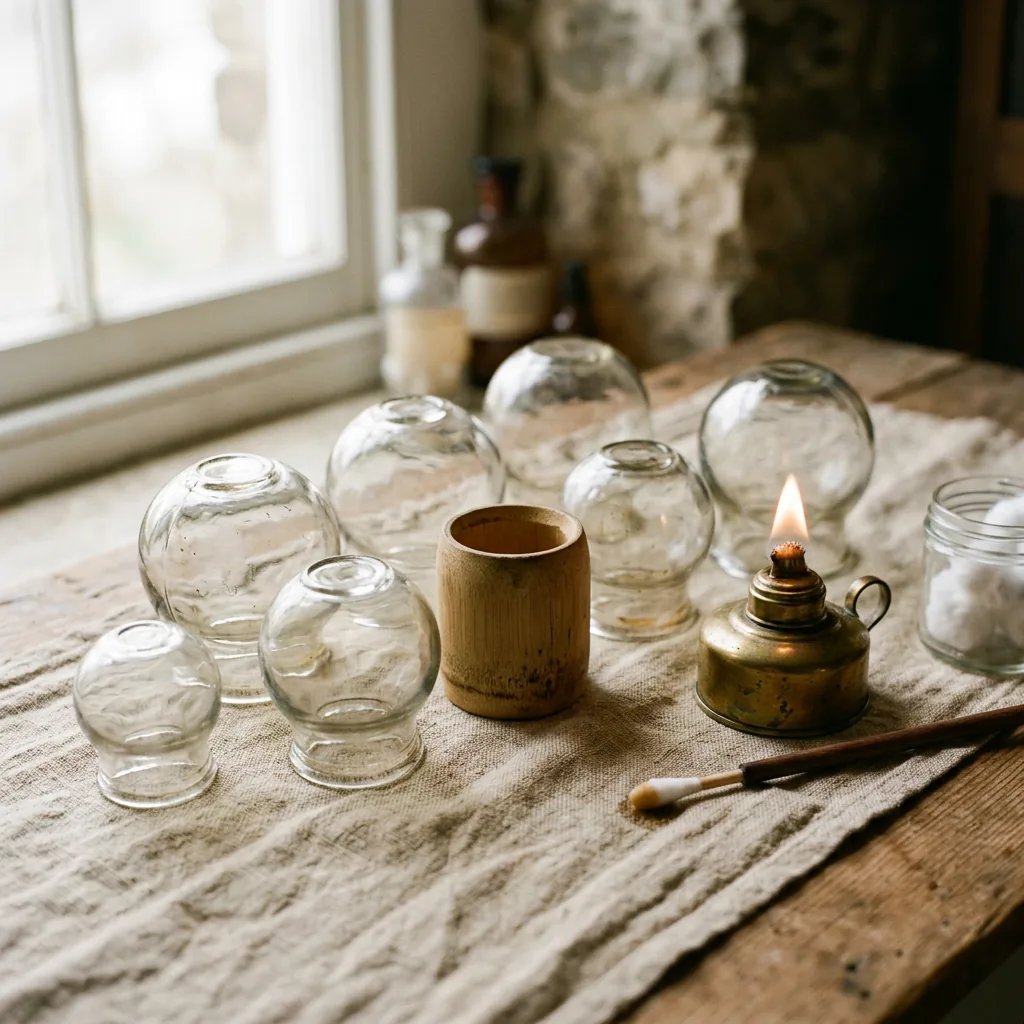
Fire Cupping (Traditional) — Glass cups, briefly warmed with an alcohol flame to displace air, then placed on the skin. The flame never touches you. Fire cupping pulls harder than vacuum and is our usual choice for thick muscle groups — upper back, glutes, hamstrings — and for patients who have done cupping before and want a deeper release.
Vacuum Cupping (Pump-Controlled) — Silicone or plastic cups with a hand pump, so we can dial suction up or down one click at a time. Good for first-time patients, smaller areas like the forearms, and anyone who prefers no flame in the room. Often combined with sliding (moving) cupping for broader release across the back.
Frequently Asked Questions
Are the marks bruises? Will they hurt?
They are not impact bruises. The marks are pooled stagnant blood being released from tissue — they are not tender when pressed (unlike a real bruise), and they fade in 3-10 days. Most patients are surprised at how little they feel during cupping itself. The sensation is a steady pull, not a pinch.
Do you sterilize the cups between patients?
Yes. Glass cups are washed, then heat-sterilized in an autoclave between uses. Silicone and plastic cups go through hospital-grade disinfectant. We also use single-use disposable cups for any case involving broken skin. The flame in fire cupping never touches you — it's used to displace air inside the cup, which is then placed on the skin once the flame is removed.
Can I work out the same day I get cupped?
Light walking is fine; we recommend skipping intense workouts for 24 hours. The treated tissue has just been worked on; it benefits from rest. Hot yoga, sauna, and very hot showers should wait until the next day. Alcohol the same day is not a great idea either.
Can I cup over a tattoo or skin condition?
Tattoos are fine — the cups don't affect ink, whether the tattoo is fresh (after fully healed at 4+ weeks) or old. We avoid active rashes, sunburn, open wounds, recent surgical scars (less than 6 weeks), varicose veins, and areas with active eczema flares. Tell us about anything skin-related before we start.
I have an event next week — will the marks show?
If your dress code shows shoulders, upper back, or chest, schedule cupping at least 10 days before to be safe. We can also reduce suction to leave lighter marks, place cups in less visible spots, or skip cupping that session in favor of acupuncture only. Just tell us at booking — we plan around it.
Fire cupping or vacuum cupping — which should I get?
We choose for you based on the area and what you need. Fire cupping pulls harder and is our usual choice for thick muscle groups (upper back, glutes, hamstrings) and patients who've cupped before. Vacuum cupping is more controllable — we can dial suction up or down click by click — and is better for first-timers, smaller areas (forearms, calves), and anyone who'd rather not have an open flame in the room. Both work.
How often is too often?
Wait until the marks have faded — typically a week to ten days — before cupping the same area again. Different areas can be treated sooner. For most desk-tension patients, every 1-2 weeks during a flare and monthly for maintenance works well. For athletes in heavy training, weekly during peak training blocks is reasonable, rotated across body regions.
Research & references
Every clinical statement on this page traces back to one of these sources. They are U.S. federal health agencies and academic medical centers — not our own marketing.
NCCIH — Cupping (safety information)
NCCIH's cupping fact sheet is safety-focused: cupping leaves temporary marks, can cause skin discoloration or burns, may worsen eczema or psoriasis, and equipment must be sterilised between patients. It makes no effectiveness claims.
NCCIH — Traditional Chinese Medicine: What You Need To Know
Studies suggest acupuncture stimulates the release of the body's natural painkillers and affects brain areas involved in processing pain; results suggest it may help chronic low-back pain, neck pain, knee osteoarthritis and carpal tunnel syndrome.
NCCIH — Chronic Pain and Complementary Health Approaches
Among the approaches reviewed — acupuncture, yoga, relaxation, tai chi, massage and spinal manipulation — acupuncture was the only one with evidence that it could reduce a patient's need for opioids. The 2022 CDC opioid-prescribing guideline also lists acupuncture as appropriate for some types of chronic pain.
Citations are summarized — please read the originals. This page is general health education, not medical advice for your specific case. Results vary, and acupuncture and Chinese medicine work best alongside, not instead of, care from your physician.
What Our Patients Say
5.0 · 23 Google reviews5.0 average across 23 verified Google reviews. Shown exactly as written.
★★★★★Amazing! After first acupuncture visit — major improvement. Added cupping and massage — results were immediate and I felt great relief from past pains. Thank you Dr. Shang.
★★★★★Highly recommended! Dr. Shang is a very skilled acupuncturist and I enjoy the treatment every time when I come here.
★★★★★Best acupuncture clinic in town! Dr. Shang is very professional and nice to everyone. I'm coming here regularly and feeling much better now!
Ready to Try Cupping Therapy?
Book your cupping session today and experience deep muscle relief.
Related Services
Acupuncture in Manhattan — Holistic Pain Relief & Wellness
Experience the healing power of Traditional Chinese Medicine at our Manhattan clinic. Our licensed acupuncturists provide safe, effective treatments for pain relief, stress reduction, and overall wellness.
Gua Sha Therapy — Muscle Relief & Facial Rejuvenation
Experience the ancient healing art of Gua Sha at our Manhattan clinic. From therapeutic body scraping for muscle tension to gentle facial Gua Sha for natural beauty, discover the transformative power of this traditional Chinese technique.
Tui Na Massage — Chinese Medical Massage Therapy
Discover Tui Na (推拿)—the therapeutic massage system of Traditional Chinese Medicine. More than relaxation, Tui Na is a powerful healing modality that treats musculoskeletal conditions, relieves pain, and restores balance to your body.