Manhattan, NYC
Sports Acupuncture — Injury Recovery & Performance
Train harder. Recover faster. Our Manhattan clinic offers specialized sports acupuncture for athletes of all levels—from weekend warriors to professionals. Get back in the game with proven Traditional Chinese Medicine techniques.
What is Sports Acupuncture?
Sports acupuncture is targeted needling for athletic injury and recovery — strains, tendinopathy, joint pain and the tight tissue that follows hard training. A session is 15–20 minutes of assessment plus 45–60 minutes of treatment with 20–25 minutes of needle retention, and electroacupuncture in the first 1–2 weeks can meaningfully shorten recovery.
Clinic facts
- Rating
- 5.0 / 5 · 23 Google reviews
- Experience
- 15+ years · 2 licensed L.Ac.
- First visit
- 75 minutes
- Follow-up
- 45–60 minutes
- Address
- 408 West 57th Street, Suite 1K, New York, NY 10019
- Hours
- Mon–Fri 9am–7pm · Sat 9am–5pm
- Phone
- (212) 265-2052 · text (347) 875-2805
- Languages
- English · 中文
Sports Injuries We Treat
Sports acupuncture is what we do for the body that trains. It's a different conversation than pain-management acupuncture, even when the techniques overlap. The runner three weeks out from the NYC Marathon with a flared piriformis isn't a pain patient — she's a training body that needs to keep training. The weekend tennis player with golfer's elbow doesn't want to stop playing, he wants the elbow to stop hurting on the backhand. The CrossFit member with a tweaky shoulder wants to know how to load Friday's session without making it worse. We treat the issue and the training week at the same time.
Sports acupuncture for athletes combines several distinct techniques. Motor-point needling activates specific muscles that aren't firing well — useful when the glute medius isn't doing its job and the IT band is paying for it. Trigger-point needling releases the deep knots in the rotator cuff, upper trapezius, or rectus femoris that are limiting your range. Electroacupuncture across two needles speeds up recovery in a freshly strained hamstring or chronically inflamed Achilles. Cupping pulls blood into a tight thoracolumbar area between marathon long runs. Tui Na breaks up scar tissue from old injuries that are still affecting your stride. Most sessions use two or three of these in combination — not a one-size-fits-all protocol.
Our Midtown Manhattan clinic on West 57th Street — near Columbus Circle, an easy walk from Central Park, Lincoln Center, and most Hell's Kitchen and UWS apartments — has built a roster of athletic patients. Recreational runners and NYC Marathon trainees from the West Side running clubs. Climbers with chronically angry fingers and elbows. Crossfit and Olympic-lifting hobbyists. Yoga teachers whose wrists or shoulders are starting to talk back. Postpartum parents returning to training. The occasional martial artist or dancer. We're not an elite-level periodization service. We're well-matched to the body that trains 3–8 hours a week and wants to keep doing so.
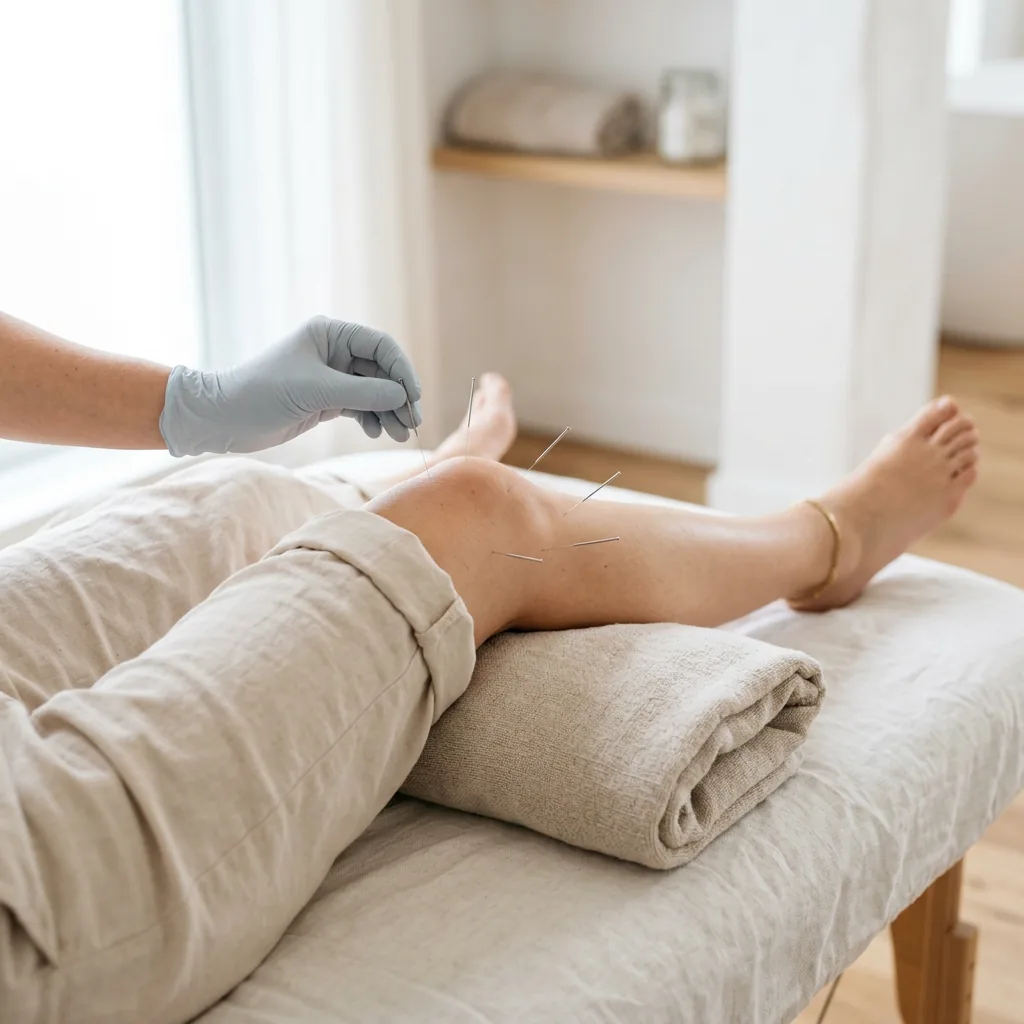
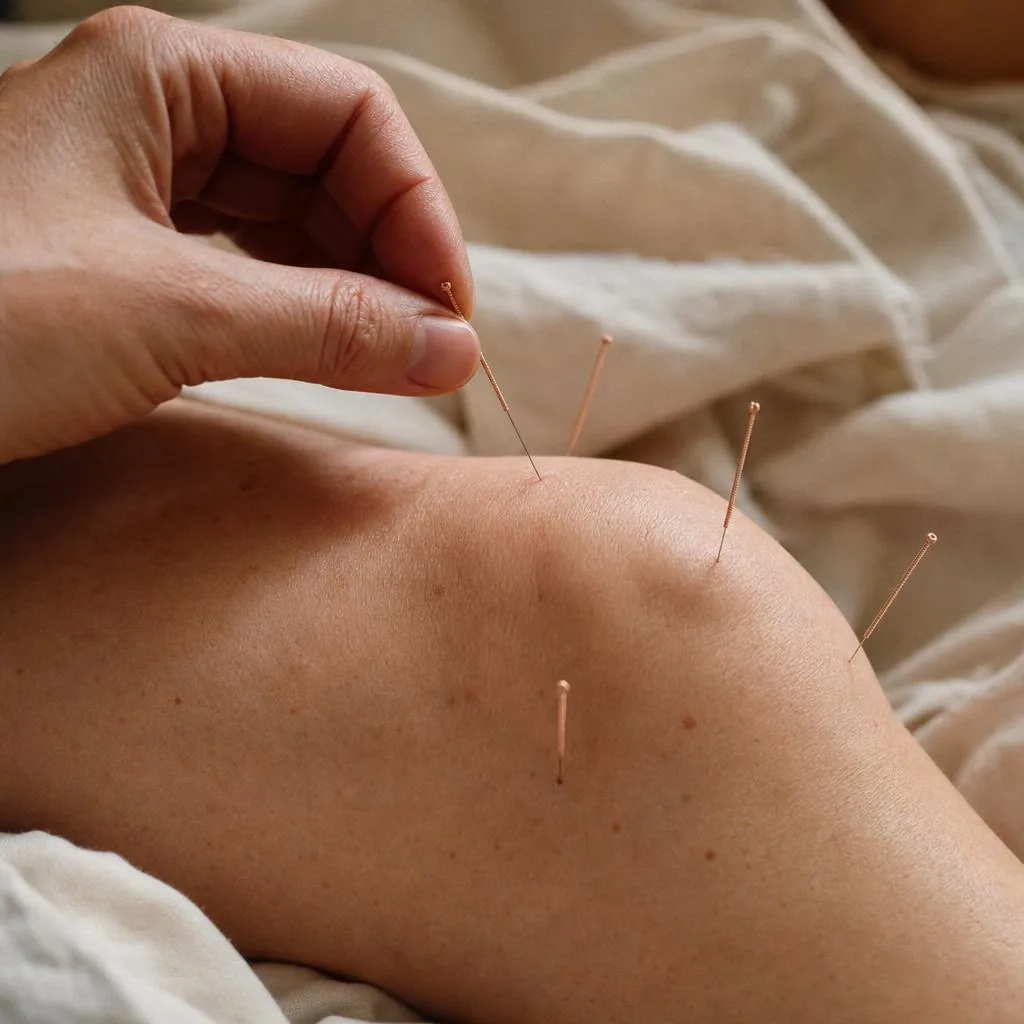
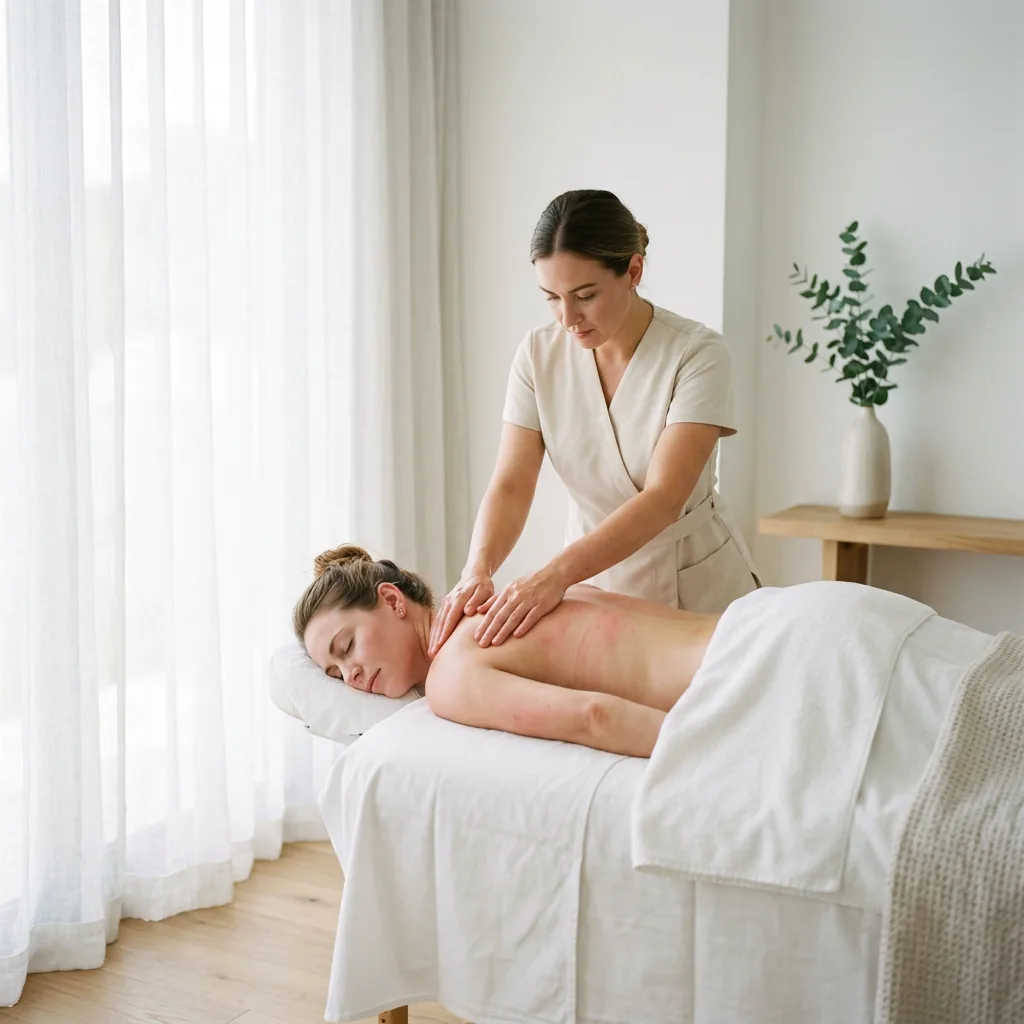
Inside the Treatment Room
Conditions We Treat
Tennis elbow / golfer's elbow
Lateral or medial epicondylitis from racket sports, climbing, or repetitive gripping. Responds well to combined motor-point needling and electroacupuncture.
Runner's knee (patellofemoral pain)
Front-of-knee pain from running, often tied to weak glutes and tight quads. We treat the knee and the chain that's overloading it.
Rotator cuff strain & shoulder impingement
From swimming, throwing, overhead lifting, or just sleeping wrong on a training week. Acupuncture pairs well with rehab exercises from your PT.
Hamstring & quad strains
Acute strains from sprinting or change-of-direction sports. Electroacupuncture in the first 1–2 weeks can meaningfully shorten the recovery window.
Plantar fasciitis
Heel and arch pain — the classic first-step-in-the-morning ache. Often takes a few weeks of consistent acupuncture but tends to settle.
IT band syndrome
Lateral knee pain in runners, usually from weak hip abductors and overloaded IT band. We treat the IT band, the glutes, and the TFL together.
Achilles tendinitis & calf strains
Common in runners adding mileage too quickly. Acupuncture and gentle electrostim, combined with appropriate load management, work well.
Shin splints (medial tibial stress)
Tibial pain from running on hard surfaces or rapid mileage increase. We treat the calf chain and check whether load and footwear are part of the picture.
Low back & hip pain from training
Lifting, rowing, cycling, or marathon-volume running pain. Often involves QL, glute medius, and piriformis. Combined acupuncture + cupping is a strong fit.
Benefits
- · Faster recovery between hard training sessions — measured in days, not weeks
- · Reduces inflammation in fresh strains and chronic overuse sites
- · Releases the specific trigger points limiting your range — IT band, rotator cuff, hamstring
- · Activates motor points in muscles that aren't firing properly (glute medius, deep cervical flexors)
- · Improves blood flow to chronically tight or scarred tissue from old injuries
- · Drug-free — no NSAID dependence between hard sessions
- · Improves sleep, which is the underrated recovery tool for any training body
- · Compatible with PT, chiro, massage, and strength coaching — we coordinate, not compete
What to Expect
- 1
Sports intake & assessment (15–20 min)
We ask what you're training for, what hurts, when it started, what aggravates it, and where you are in your training cycle (build, peak, taper, off-season). We check range of motion in the affected area, palpate for trigger points, and watch you do a relevant movement if it's a movement-specific issue (e.g., the squat that bothers your hip, the throwing motion that catches your shoulder). Tongue and pulse follow.
- 2
Treatment session (45–60 min)
Most sports sessions combine motor-point needling at specific muscle bellies, trigger-point release in the tight areas, gentle electroacupuncture for chronic or freshly strained tissue, and often cupping or Tui Na in the same hour. Needles stay in for 20–25 minutes. We adjust technique mid-session based on what you're feeling — sports acupuncture is interactive, not standardized.
- 3
Training-week guidance
Before you leave we tell you specifically what to do — or not do — in the next 24–72 hours. 'Easy run is fine, no intervals tomorrow.' 'Skip pressing this week, but rows and pulls are OK.' 'Hold off on the long run by 2 days.' We'll coordinate with your coach or PT if you have them. For most athletes we recommend weekly sessions during build phases and biweekly during maintenance.
Sports Acupuncture at a Glance
| What you want to know | Answer |
|---|---|
| Session structure | 15–20 minutes of sports intake and assessment, then a 45–60 minute treatment. Needles stay in for 20–25 minutes. |
| Electroacupuncture timing | Used in the first 1–2 weeks after injury, electroacupuncture can meaningfully shorten the recovery window. |
| Joint pain evidence | A 2018 review of 10 studies (2,413 participants) found acupuncture more effective than no treatment for osteoarthritis pain, mostly knee osteoarthritis. |
| Training the same day | Light movement is fine. Skip max-effort lifting and sauna for a few hours after deep needling or electroacupuncture. |
Why choose Delight for sports acupuncture
Sports acupuncture works best when the practitioner can move fluently between motor-point needling, trigger-point release, and the broader system view of TCM — and when other modalities sit in the same room so a stubborn knot or fresh strain can be handled the same visit. Dr. Yu Qi, L.Ac. (MSTOM, 7+ years) treats acute and chronic pain — including overuse and post-injury cases — as a core part of her practice, and routinely combines acupuncture with cupping, Tui Na, and herbal liniments in a single session.
Our patients include runners training for the NYC marathon, recreational lifters, climbers, weekend tennis and pickleball players, and post-baby parents getting back to the gym. Both practitioners are NY-licensed and bilingual (English / 中文). We're a good match for someone training 3–8 hours a week who wants to keep training; we are honest that we are not an elite-level periodization service. If something looks structural — a suspected ligament tear, a stress fracture pattern, a meniscus that locks — we send you to orthopedics rather than try to needle around it.
Frequently Asked Questions
When during a training cycle should I get sports acupuncture?
It depends on the goal. For maintenance during a build phase, weekly or every-other-week works well. For an acute issue (a tight glute that's affecting your stride, a flared-up elbow), come in as soon as you notice it — small problems resolve in 1–3 visits, problems you've trained on for two months take longer. For race week, schedule any deeper session 5–7 days before race day, with a light flush 24–48 hours out if you want one.
Can I train the same day as a treatment?
Easy training or technique work is fine. A hard workout or long run is not ideal the same day as deeper needling or electroacupuncture — give yourself 24 hours. We'll tell you at the end of the session whether what we just did was a light tune-up (train as planned) or substantial work (back off for a day). If you have a race within 48 hours, tell us at booking so we keep the session conservative.
Do you do dry needling? How is this different?
What we do includes motor-point and trigger-point needling — which is functionally what dry needling refers to — but as licensed acupuncturists (L.Ac.) we are also trained in the broader TCM framework. So in the same session we can treat the trigger point in your upper trap and also address the kidney-yang depletion pattern that's keeping you stiff and slow to recover. We use sterile single-use needles either way.
How does sports acupuncture compare with sports massage?
Different tools, often complementary. Sports massage works the muscle and fascia from the outside — broad strokes, pressure, friction across fibers. Sports acupuncture works from inside the muscle — a needle into a trigger point releases it in a way no thumb can reach, and electroacupuncture drives focused recovery in a strained area. Many of our patients alternate or combine them. For a deep chronic knot, acupuncture often gets it. For overall tissue quality and post-event flush, massage often wins. We do both at this clinic and can combine them in one visit.
I'm not really an athlete — can I still book a sports acupuncture session?
Absolutely. The 'sports' label refers more to the technique mix (motor-point needling, electroacupuncture, biomechanical focus) than to whether you compete. If you have pain from a movement pattern — gym, yoga, dance, weekend hiking, picking up your toddler — sports acupuncture is often a good fit. The body that lifts kids and groceries is the body we work with most.
Does insurance cover sports acupuncture?
Coverage depends on the diagnosis. If sports acupuncture is being billed under a covered diagnosis (chronic low back pain, for example), many plans will reimburse. Pure performance work or maintenance sessions are usually out-of-pocket. Call your insurance to check 'Do I have acupuncture benefits, and what diagnoses are covered?' — we provide superbills for out-of-network reimbursement.
How quickly will the injury feel better?
Depends on the issue and how long you've trained on it. A small acute strain often resolves in 1–3 visits. A problem you've trained through for two months may take 4–8 visits to fully settle and an honest conversation about load and form. Chronic overuse patterns sometimes need 6–12 visits plus changes to your training week. We review every 4 visits and adjust honestly — if it's not the right tool, we say so.
Research & references
Every clinical statement on this page traces back to one of these sources. They are U.S. federal health agencies and academic medical centers — not our own marketing.
NCCIH — Acupuncture: Effectiveness and Safety
Acupuncture has been in use for at least 2,500 years and, per WHO data, is practiced in 103 of 129 reporting countries. A pooled analysis of 20 studies (6,376 participants) found the benefit persisted for a year after treatment ended for every pain condition studied except neck pain.
NCCIH — Acupuncture for osteoarthritis pain
A 2018 review of 10 studies (2,413 participants) found acupuncture more effective than no treatment for osteoarthritis pain, most of it knee osteoarthritis. The 2019 American College of Rheumatology and Arthritis Foundation guideline conditionally recommends acupuncture for hand, hip or knee arthritis.
NCCIH — Chronic Pain and Complementary Health Approaches
Among the approaches reviewed — acupuncture, yoga, relaxation, tai chi, massage and spinal manipulation — acupuncture was the only one with evidence that it could reduce a patient's need for opioids. The 2022 CDC opioid-prescribing guideline also lists acupuncture as appropriate for some types of chronic pain.
Citations are summarized — please read the originals. This page is general health education, not medical advice for your specific case. Results vary, and acupuncture and Chinese medicine work best alongside, not instead of, care from your physician.
What Our Patients Say
5.0 · 23 Google reviews5.0 average across 23 verified Google reviews. Shown exactly as written.
★★★★★Amazing! After first acupuncture visit — major improvement. Added cupping and massage — results were immediate and I felt great relief from past pains. Thank you Dr. Shang.
★★★★★Highly recommended! Dr. Shang is a very skilled acupuncturist and I enjoy the treatment every time when I come here.
★★★★★Best acupuncture clinic in town! Dr. Shang is very professional and nice to everyone. I'm coming here regularly and feeling much better now!
Elevate Your Athletic Performance
Join the athletes who trust acupuncture for peak performance and faster recovery.
Related Services
Sports Massage — Peak Performance Recovery
Whether you're training for a marathon or recovering from an intense workout, our sports massage therapy helps you perform better, recover faster, and stay injury-free.
Cupping Therapy in Manhattan — Hands-on Relief for Back, Neck & Shoulder Tension
Cupping is one of the most-requested treatments at our 57th Street clinic. Dr. Xaoling Shang, L.Ac. (MSTOM, NCCAOM-certified, 15+ years in practice) uses both traditional fire cups and modern vacuum cups, choosing the method that fits your body and what you came in for.
Tui Na Massage — Chinese Medical Massage Therapy
Discover Tui Na (推拿)—the therapeutic massage system of Traditional Chinese Medicine. More than relaxation, Tui Na is a powerful healing modality that treats musculoskeletal conditions, relieves pain, and restores balance to your body.