
Manhattan, NYC
Tui Na Massage — Chinese Medical Massage Therapy
Discover Tui Na (推拿)—the therapeutic massage system of Traditional Chinese Medicine. More than relaxation, Tui Na is a powerful healing modality that treats musculoskeletal conditions, relieves pain, and restores balance to your body.
What is Tui Na Massage?
Tui na is Chinese medical massage — clinical hands-on work along the meridians rather than a relaxation treatment. A visit is a 10 minute intake plus 40–50 minutes of treatment. It pairs well with needling: we often open with 20–30 minutes of tui na to soften an area, then place needles where they will reach deepest.
Clinic facts
- Rating
- 5.0 / 5 · 23 Google reviews
- Experience
- 15+ years · 2 licensed L.Ac.
- First visit
- 75 minutes
- Follow-up
- 45–60 minutes
- Address
- 408 West 57th Street, Suite 1K, New York, NY 10019
- Hours
- Mon–Fri 9am–7pm · Sat 9am–5pm
- Phone
- (212) 265-2052 · text (347) 875-2805
- Languages
- English · 中文
What is Tui Na?
Tui Na (推拿) is the bodywork branch of Traditional Chinese Medicine — practiced clinically in China for over 2,000 years and formalized as one of the four main TCM disciplines (alongside acupuncture, herbal medicine and qigong). The name literally means 'push-grasp.' It is not a relaxation massage with Chinese branding; it is a hands-on therapy built on the same meridian and acupoint map as acupuncture, just delivered through pressure and movement instead of needles. A tui na session is diagnostic from the first minute — what the practitioner feels in the tissue informs which meridians to work and which points to press.
At our Midtown Manhattan clinic, tui na is one of the workhorses for musculoskeletal cases. Dr. Yu Qi (MSTOM, L.Ac., 7+ years acupuncture, 10+ years bodywork) handles most tui na sessions and is particularly known for sciatica, frozen shoulder, post-injury rehab, and chronic neck-shoulder cases where deep myofascial release plus point work makes the difference. Many sessions combine 20-30 minutes of tui na to soften the area, followed by acupuncture to reach the deeper layer — patients tell us this combination is qualitatively different from doing either alone.
Core techniques include Tui (推, pushing) — rhythmic strokes along meridians; Na (拿, grasping) — deep grasping of muscles and tissues; An (按, pressing) — firm sustained pressure on acupoints; Mo (摩, rubbing) — circular rubbing motions; Gun (滚, rolling) — a rhythmic rolling technique with the back of the hand commonly used on the back and shoulders; and joint mobilization — careful articulation of the spine, shoulders, hips and knees. A practitioner typically uses 8-10 techniques in a single session, chosen for the tissue and the pattern.
Tui na is also one of the few TCM modalities you can receive fully clothed — patients wear loose-fitting clothing and lie face-down on a heated table. No oils, no draping anxieties, no need to undress. That said, for cases where direct skin contact helps (sliding-cup tui na, gua sha layered on top, acupuncture added in the same visit) we use a treatment gown and standard draping. We adapt to what the case and the patient prefer.
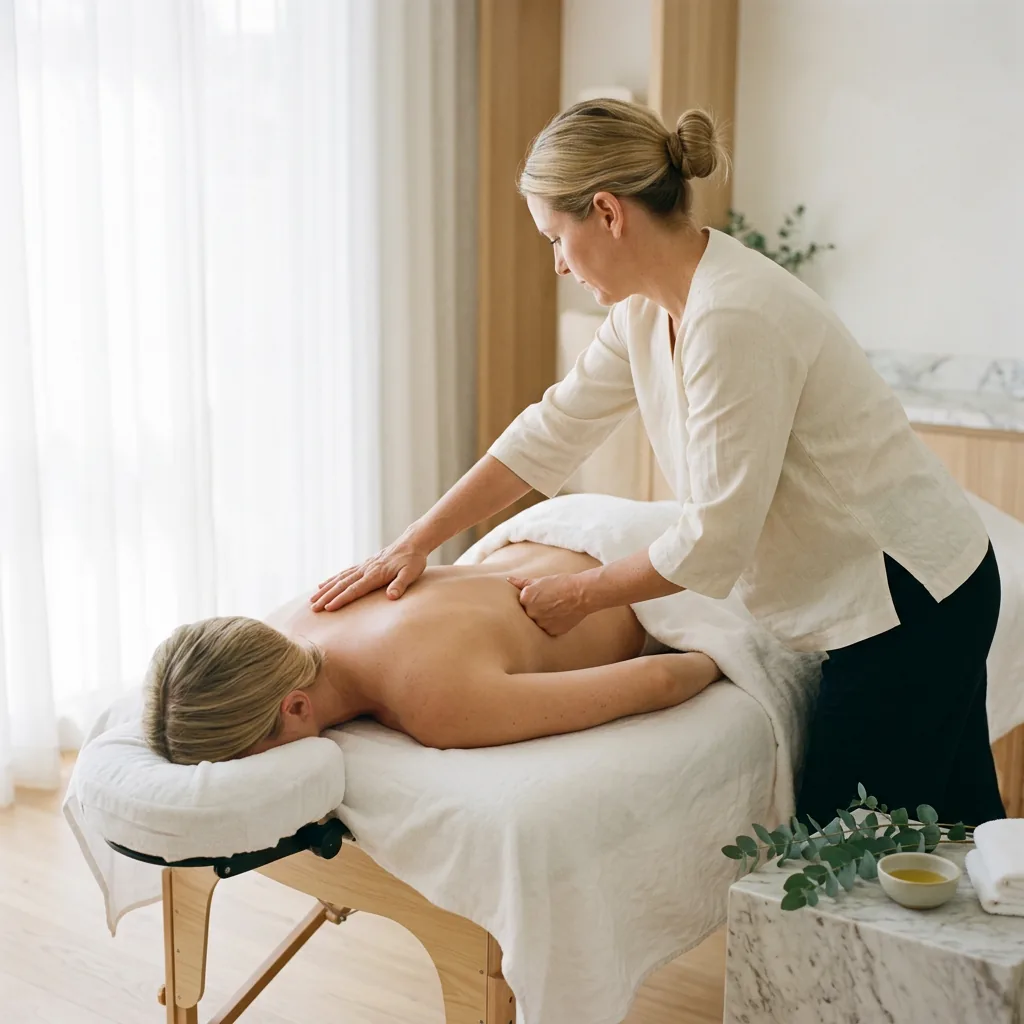
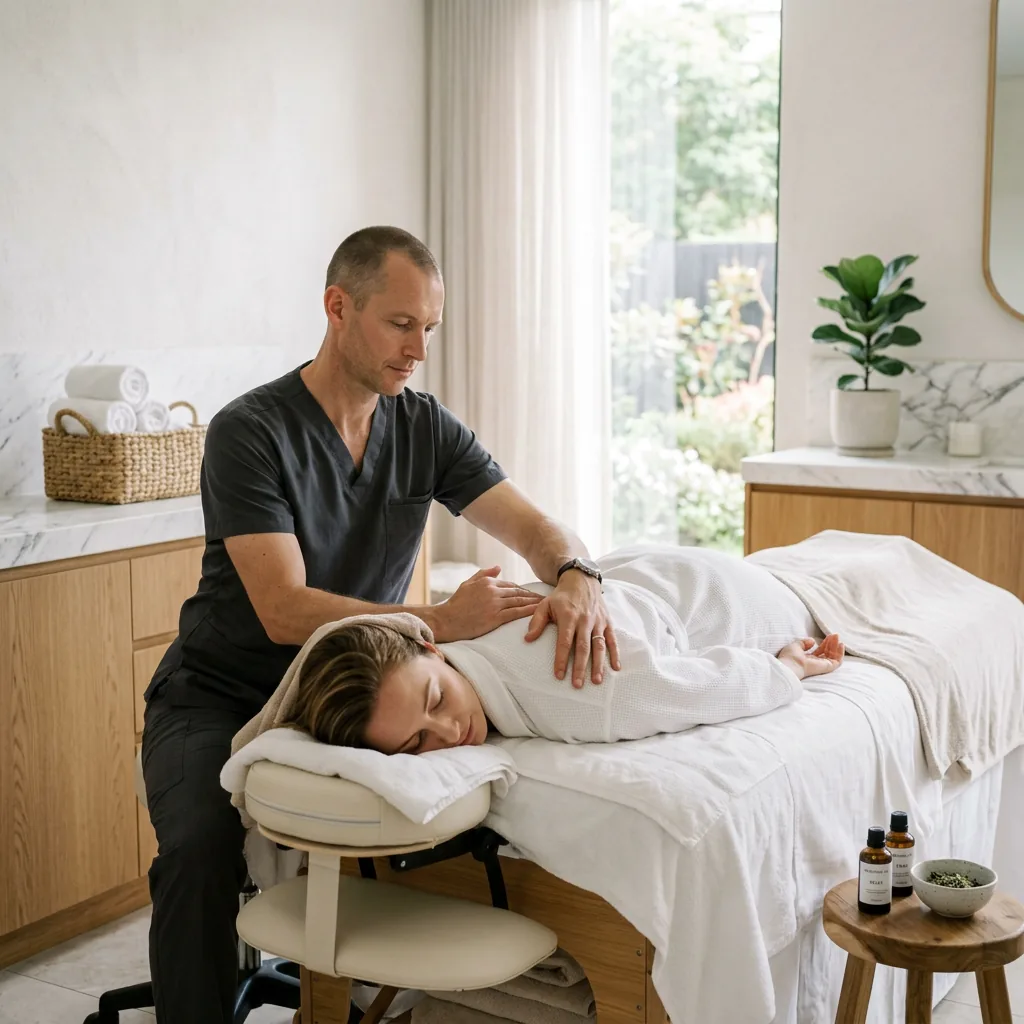
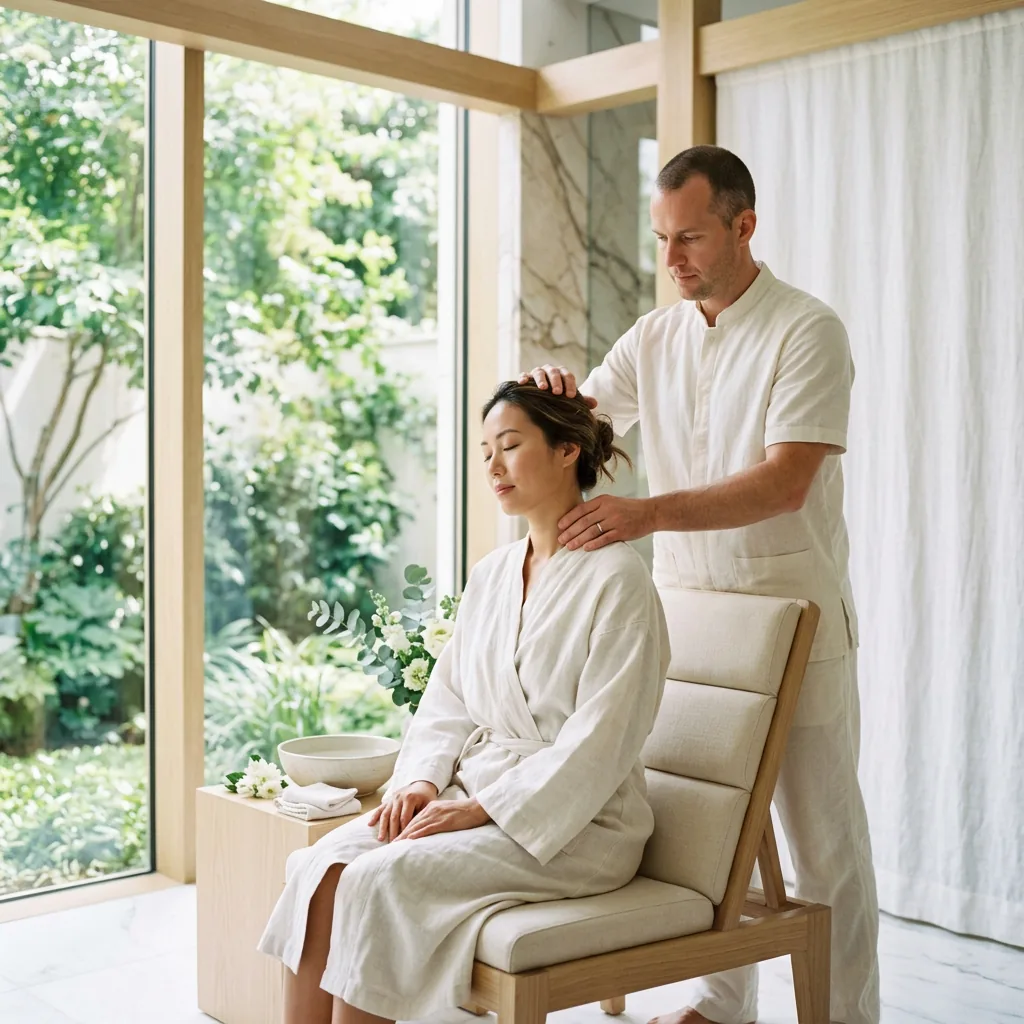
Inside the Treatment Room
Conditions We Treat
Neck & shoulder pain
Desk-postural pain, trapezius and levator scapulae trigger points, suboccipital tension causing headaches.
Sciatica & piriformis syndrome
Dr. Yu's particular specialty — combining deep piriformis release with sacral acupoints and Bladder-meridian work down the leg.
Lower back pain & stiffness
QL, erector spinae, multifidus release plus joint mobilization for stiff lumbar segments.
Frozen shoulder (adhesive capsulitis)
A condition where tui na's combination of soft-tissue work and joint mobilization often outperforms massage alone.
Sports injuries & post-injury rehab
Strains, mild ligament injuries, post-fracture stiffness once cleared by your orthopedist.
Migraines & tension-type headaches
Suboccipital and upper-trap release, often combined with acupuncture for prevention.
Joint stiffness — hips, knees, ankles
Mobilization techniques restoring range without forcing the joint.
Pediatric tui na (limited cases)
Specific indications in children — digestive issues, sleep disturbance, mild respiratory issues. Adult dosing techniques are not used.
Stress, anxiety & burnout
Calming routine targeting the shoulders, neck, and Du-meridian along the spine — most patients fall asleep.
Benefits
- · Releases trigger points in the upper trapezius and rhomboids
- · Mobilizes stiff shoulders and necks from desk work
- · Addresses sciatic and piriformis tightness
- · Speeds recovery from sports overuse
- · Calms the nervous system — most patients fall asleep
- · Combines naturally with acupuncture and cupping
What to Expect
- 1
Intake (10 min)
We ask what hurts and when, what makes it worse (sitting? sleeping on one side? a specific lift?), and check the area by hand. If acupuncture or cupping is a better fit that day, we'll say so.
- 2
Hands-on treatment (40–50 min)
Lying face-down on a heated table, you receive rhythmic pushing, kneading, and pressing along meridians and into the muscle groups that hold the problem. Some sections are firm; we check pressure as we go.
- 3
Aftercare
Drink water, avoid the gym for 24 hours if you got deep work, and expect mild soreness for a day — like after a hard workout. We'll suggest follow-up frequency based on whether the issue is acute or chronic.
Tui Na Massage at a Glance
| What you want to know | Answer |
|---|---|
| Session structure | 10 minute intake, then 40–50 minutes of hands-on treatment. |
| Combined with acupuncture | We often open with 20–30 minutes of tui na to soften the area, then needle where it will reach deepest. |
| How it differs from spa massage | Tui na follows a TCM diagnosis and works specific channels and points. It is treatment, not a relaxation hour. |
| Neck and shoulder evidence | A 2013 review of 12 studies (757 participants) found massage more helpful than inactive therapies for neck and shoulder pain. |
Tui Na vs. Regular Massage
Tui Na is therapeutic and treats specific conditions — it works on meridians and acupoints, addresses the root cause of pain, and can be combined with acupuncture for stronger results.
Spa or relaxation massage, by contrast, is primarily for relaxation and general muscle release, offers temporary relief, and stands alone rather than being part of a treatment plan.
Frequently Asked Questions
Do I need to undress for tui na?
No — tui na is one of the few bodywork modalities you can receive fully clothed. Wear loose, comfortable clothing that doesn't restrict at the shoulders, neck or hips. We provide a treatment gown if you'd prefer, or if direct skin contact is helpful for your case (sliding cups, gua sha, or acupuncture added in the same visit). Either way, standard medical draping applies.
Is tui na painful?
It can be intense in the spots that have been gripping for weeks — a 'good hurt' that releases as the tissue lets go. We adjust pressure throughout; nothing should be sharp, electric, or breath-holding. If anything feels wrong, say so and we change immediately. After deep work on a really stuck area, mild soreness for a day is normal — like after a hard workout.
How is tui na different from Western deep tissue massage?
Tui na is diagnostic and meridian-based. Rather than working sheet-by-sheet through every muscle group, the practitioner reads the tissue and chooses specific meridians and acupoints based on a TCM pattern. That's why it can be combined seamlessly with acupuncture in the same visit, and why a session for sciatica looks very different from a session for shoulder pain — even if a Swedish massage might cover similar ground in both cases.
Can I get tui na and acupuncture in the same visit?
Yes — this is one of our most common combinations. Usually we open with 20-30 minutes of tui na to soften the area, then place needles where they'll reach deepest. For chronic neck-shoulder cases and sciatica especially, the combination is qualitatively better than either alone. A combo visit runs about 75 minutes total.
Do you do pediatric tui na?
Yes, in a limited set of cases — digestive issues, sleep disturbance, mild respiratory issues, colicky babies. Pediatric tui na uses completely different techniques and dosing than adult work, performed by Dr. Yu Qi. We do not do pediatric tui na for symptoms that need urgent Western workup — fever in a young infant, persistent vomiting, breathing distress all belong in your pediatrician's office or the ER first.
How many sessions will I need?
Acute injuries (fresh strain, recent neck tweak): 2-4 sessions over 2 weeks. Chronic patterns (long-standing sciatica, frozen shoulder, chronic neck-shoulder): typically weekly for 4-6 weeks, then taper to every 2-3 weeks. We review every 4 visits and stop or pivot if there's no progress.
Is tui na safe during pregnancy?
Yes, with modifications — side-lying positioning after the first trimester, avoiding certain points (Spleen 6, Large Intestine 4, sacral points) as standard precaution, and gentler pressure throughout. Tell us your due date when you book so we can plan the session appropriately.
Research & references
Every clinical statement on this page traces back to one of these sources. They are U.S. federal health agencies and academic medical centers — not our own marketing.
NCCIH — Massage Therapy: What You Need To Know
A 2013 review of 12 studies (757 participants) found massage more helpful than inactive therapies for neck and shoulder pain; a 2016 review of 4 U.S. studies (519 participants) found massage can give short-term neck-pain relief when sessions are long and frequent enough.
NCCIH — Massage Therapy for Health: What the Science Says
NCCIH's clinician-facing digest of the massage evidence base, condition by condition, with the strength of evidence stated for each.
NCCIH — Traditional Chinese Medicine: What You Need To Know
Studies suggest acupuncture stimulates the release of the body's natural painkillers and affects brain areas involved in processing pain; results suggest it may help chronic low-back pain, neck pain, knee osteoarthritis and carpal tunnel syndrome.
Citations are summarized — please read the originals. This page is general health education, not medical advice for your specific case. Results vary, and acupuncture and Chinese medicine work best alongside, not instead of, care from your physician.
What Our Patients Say
5.0 · 23 Google reviews5.0 average across 23 verified Google reviews. Shown exactly as written.
★★★★★Amazing! After first acupuncture visit — major improvement. Added cupping and massage — results were immediate and I felt great relief from past pains. Thank you Dr. Shang.
★★★★★Highly recommended! Dr. Shang is a very skilled acupuncturist and I enjoy the treatment every time when I come here.
★★★★★Best acupuncture clinic in town! Dr. Shang is very professional and nice to everyone. I'm coming here regularly and feeling much better now!
Experience Therapeutic Chinese Massage
Book your Tui Na session today and discover the healing power of Chinese medical massage.
Related Services
Acupuncture in Manhattan — Holistic Pain Relief & Wellness
Experience the healing power of Traditional Chinese Medicine at our Manhattan clinic. Our licensed acupuncturists provide safe, effective treatments for pain relief, stress reduction, and overall wellness.
Cupping Therapy in Manhattan — Hands-on Relief for Back, Neck & Shoulder Tension
Cupping is one of the most-requested treatments at our 57th Street clinic. Dr. Xaoling Shang, L.Ac. (MSTOM, NCCAOM-certified, 15+ years in practice) uses both traditional fire cups and modern vacuum cups, choosing the method that fits your body and what you came in for.
Sports Massage — Peak Performance Recovery
Whether you're training for a marathon or recovering from an intense workout, our sports massage therapy helps you perform better, recover faster, and stay injury-free.