30–90 min sessions
Sports Massage — Peak Performance Recovery
Whether you're training for a marathon or recovering from an intense workout, our sports massage therapy helps you perform better, recover faster, and stay injury-free.
What is Sports Massage Therapy?
Sports massage is deep, targeted bodywork for athletic recovery and overuse injury, booked in 30–90 minute sessions. A visit is a 5–10 minute intake plus 50–80 minutes hands-on. NCCIH reports a 2013 review of 12 studies (757 participants) found massage more helpful than inactive therapies for neck and shoulder pain.
Clinic facts
- Rating
- 5.0 / 5 · 23 Google reviews
- Experience
- 15+ years · 2 licensed L.Ac.
- First visit
- 75 minutes
- Follow-up
- 45–60 minutes
- Address
- 408 West 57th Street, Suite 1K, New York, NY 10019
- Hours
- Mon–Fri 9am–7pm · Sat 9am–5pm
- Phone
- (212) 265-2052 · text (347) 875-2805
- Languages
- English · 中文
Benefits of Sports Massage
Sports massage is goal-directed bodywork. It's not the spa massage that aims to relax you for the next 90 minutes; it's the targeted work that addresses what's happening in the IT band, the rotator cuff, or the deep glute that's been quietly sabotaging your stride for three weeks. The conversation that opens a sports massage Manhattan session sounds different from a Swedish massage intake. We ask what you're training for, what hurts, what aggravates it, and where you are in the training cycle. Then we work the muscle groups that matter for the answer.
Sports massage therapy NYC works through several mechanisms that conventional pain-management modalities often miss. It restores normal muscle resting tone in chronically tight tissue (the upper trapezius and QL of a desk-bound finance worker who also lifts after work). It breaks down myofascial adhesions and scar tissue from old injuries — the ankle sprain from three years ago that's still affecting your gait. It improves local circulation, which clears the metabolic byproducts of hard training. It activates parasympathetic tone, which is when the body actually does its recovery work. And it provides direct, immediate feedback to the nervous system about where the body is tight — a kind of mapping that often surfaces tension you didn't know you were carrying.
Our Midtown Manhattan clinic sits on West 57th Street between 9th and 10th Avenue, near Columbus Circle. Easy walk from Central Park, Lincoln Center, Hell's Kitchen apartments, and the Upper West Side. We see a steady stream of recreational athletes — NYC Marathon trainees, weekend tennis and pickleball players, climbers, CrossFit and Olympic-lifting hobbyists, postpartum parents getting back to the gym, yoga teachers whose shoulders are starting to talk back. What makes our sports massage different from a chain studio: the same room contains acupuncture, electroacupuncture, and cupping. If a knot won't release with hands alone, we can put a needle directly into it in the same hour. That's a combination most studios cannot offer.
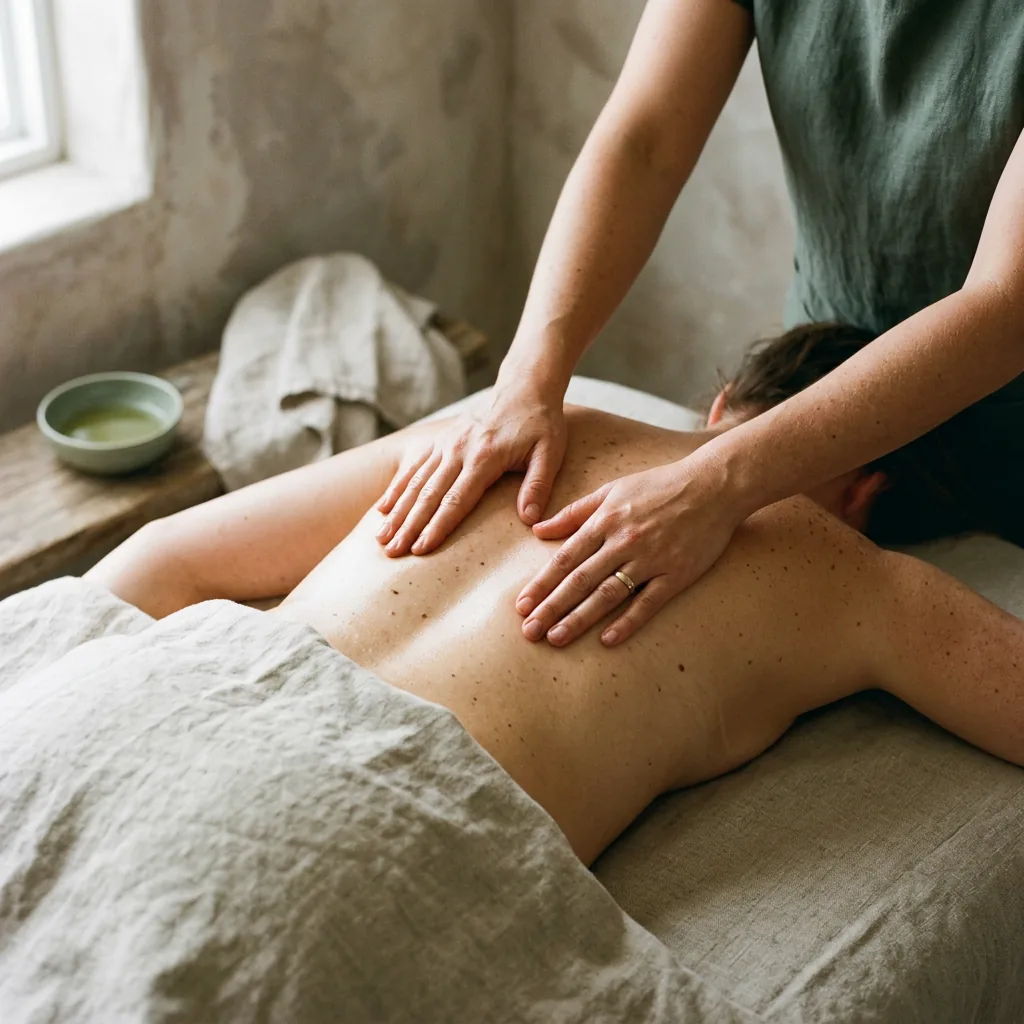
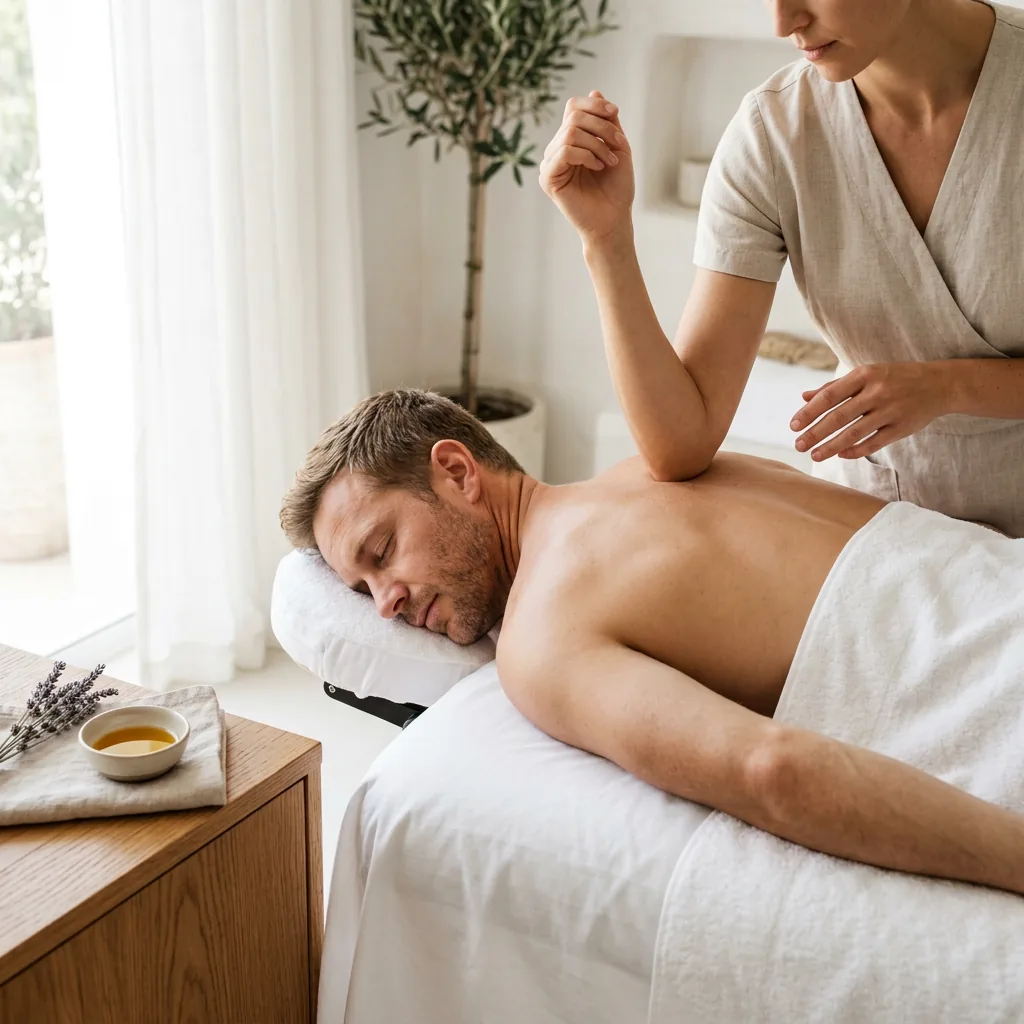
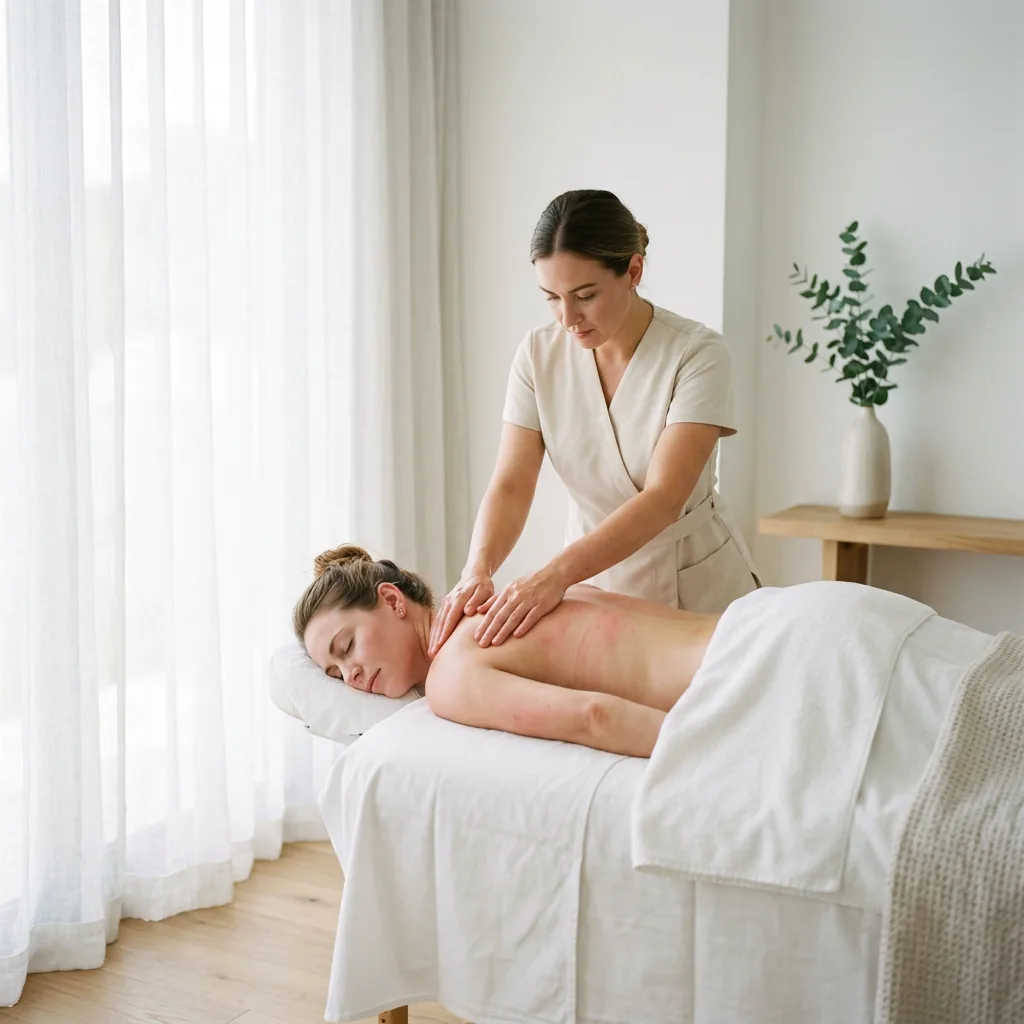
Inside the Treatment Room
Conditions We Treat
Marathon & half-marathon runners
Build-phase maintenance, long-run recovery, and pre/post-race work — particularly tight quads, glutes, calves, and IT band.
Recreational lifters & CrossFit athletes
Tight thoracic spine, upper traps, lats, and quads from progressive loading. We address the chronic tightness that limits your range and the new soreness from this week's session.
Climbers & gymnasts
Chronically tight forearms, lats, and pec minor; sticky shoulders and angry elbows. The body that hangs and pulls for hours has predictable patterns.
Cyclists & spinning enthusiasts
Tight hip flexors, glutes, lower back, and neck from the cycling posture. Particularly common in indoor cyclists who don't get the variety of road riding.
Yoga teachers & dancers
End-range stress patterns — wrists, shoulders, hips, ankles. Often counterintuitive: people whose bodies look loose are often holding tension deep in stabilizing muscles.
Postpartum parents returning to training
Lower back, hips, neck, and shoulders that haven't quite reset. We work alongside any pelvic-floor PT you're doing.
Desk-bound trainees with weekend hobbies
The most common pattern in Midtown: 50 hours a week sitting plus 5–8 hours a week of training. Tight everything, particularly the chest, hip flexors, and posterior chain.
Anyone training through chronic muscle tension
You don't have to compete to benefit. The body that lifts kids and groceries is the body we work with most.
Benefits
- · Faster recovery between hard workouts — measured in days, not weeks
- · Reduced delayed-onset muscle soreness after long runs or heavy lifting days
- · Improved flexibility and range of motion — especially in the hips, thoracic spine, and shoulders
- · Releases trigger points in upper trapezius, levator scapulae, QL, glute medius, and piriformis
- · Breaks down myofascial adhesions and scar tissue from old injuries
- · Enhanced performance through better tissue quality and movement freedom
- · Injury prevention by addressing tight, overloaded, or underactive muscles before they break
- · Better sleep on session nights — most people sleep deeper after a deep tissue session
What to Expect
- 1
Quick intake (5–10 min)
We ask what you're training for, what hurts, what feels stuck, when your next hard session or race is, and which areas you specifically do NOT want worked. (Many people have a favorite hot spot and a no-go zone — we honor both.) For new patients we also briefly screen for anything that would change our approach (recent injury, surgery, pregnancy, blood thinners).
- 2
Treatment (50–80 min)
We use a mix of broad warming strokes, focused trigger-point pressure, and slow myofascial work on the tight areas. Pressure is constantly adjusted based on your feedback — speak up. For the larger muscle groups (glutes, quads, lats), pressure will go deep when needed. For sensitive areas (neck, suboccipitals, forearm flexors), we work slower and lighter. If a knot won't release with hands alone, we'll often suggest adding a single needle in the same session.
- 3
Pre-event vs recovery vs maintenance
Pre-event work (24–48 hours before competition): short, stimulating, lighter pressure. Recovery work (24–72 hours after a hard session): slow, draining strokes, deeper but kinder. Maintenance work (between training blocks): the deepest, slowest, most thorough version — the one that often surfaces emotion or feels uncomfortable in the moment but leaves you walking differently for the next two weeks.
- 4
Aftercare & next session
Drink water, walk for 10 minutes before you go home, no extreme heat (sauna, very hot shower) for a few hours after deep work. Mild soreness for 24 hours after a deeper session is normal — like the day after a moderate workout. For chronic tightness or active training, weekly or biweekly is the sweet spot; for general maintenance, monthly works well.
Sports Massage at a Glance
| What you want to know | Answer |
|---|---|
| Session lengths | 30–90 minutes. A visit is a 5–10 minute intake plus 50–80 minutes of hands-on work. |
| Neck and shoulder evidence | A 2016 review of 4 U.S. studies (519 participants) found massage can give short-term neck-pain relief when sessions are long enough and frequent enough. |
| Aftercare | Drink water, walk for 10 minutes before heading home, and avoid sauna or a very hot shower for a few hours after deep work. |
| Safety first | Tell your therapist about any medical condition, and check that your practitioner is licensed in New York State — NCCIH's standing advice. |
Why choose Delight for sports massage
Our sports massage sits inside a TCM clinic, which gives you something that a chain studio cannot: the same hour can include cupping for stubborn upper-back tightness, motor-point acupuncture for a specific muscle that won't fire, or a quick herbal liniment for a fresh strain. Dr. Yu Qi, L.Ac. brings a decade of massage-therapy experience alongside her acupuncture training.
We work with runners training for the NYC marathon, recreational lifters, post-baby parents trying to get back in the gym, and weekend tennis players with cranky elbows. We are not the right call for elite-level periodization — but for the body of someone who trains 3–6 hours a week, we are well-matched.
Frequently Asked Questions
How is this different from a Swedish or deep-tissue massage?
Sports massage is goal-directed: we ask what you're training for and what hurts, then work the muscle groups that matter for that movement. Pressure varies by phase — lighter and stimulating before an event, firmer and slower for recovery or maintenance.
How close to a race should I get my last massage?
For a deep, recovery-style session: at least 5–7 days out. For a short, pre-event flush: 24–48 hours before is fine. Don't try a new style of massage in race week.
Will I be sore afterward?
Possibly mild soreness for 24 hours after deeper work — like a moderate workout. Drink water, sleep enough, and avoid your hardest training session the next day if you got deep work.
Can I combine massage with acupuncture in the same visit?
Yes — this is one of our most-requested combinations for chronic tightness or stubborn injuries. Usually 30–45 minutes of massage followed by 20 minutes of needling in the same room.
How often should I get a sports massage during marathon training?
Through the build phase: every 2–3 weeks is plenty for most recreational runners. Add a session 10 days before your peak long run if budget allows. In peak/taper week: one short, light session 24–48 hours before race day, then a recovery session 3–7 days post-race once the worst soreness has passed. Don't try a new style of massage in race week.
Will deep tissue work bruise me?
Light bruising in particularly sensitive spots is occasional but not common with hands-only work. If we add cupping in the same session, expect circular discoloration in the cupped areas — this looks dramatic for 3–7 days but is not a bruise in the medical sense and fades without consequence. Tell us at booking if you bruise easily or are on a blood thinner.
Research & references
Every clinical statement on this page traces back to one of these sources. They are U.S. federal health agencies and academic medical centers — not our own marketing.
NCCIH — Massage Therapy: What You Need To Know
A 2013 review of 12 studies (757 participants) found massage more helpful than inactive therapies for neck and shoulder pain; a 2016 review of 4 U.S. studies (519 participants) found massage can give short-term neck-pain relief when sessions are long and frequent enough.
NCCIH — Massage for knee osteoarthritis
Of 6 studies evaluating massage for knee osteoarthritis (408 participants), 5 found short-term pain relief; two of those (149 participants) used essential oils — aromatherapy massage.
AMTA — Massage Can Improve Health and Wellness
The American Massage Therapy Association's position statement summarising the research linking massage therapy to improved health and wellness outcomes.
Citations are summarized — please read the originals. This page is general health education, not medical advice for your specific case. Results vary, and acupuncture and Chinese medicine work best alongside, not instead of, care from your physician.
What Our Patients Say
5.0 · 23 Google reviews5.0 average across 23 verified Google reviews. Shown exactly as written.
★★★★★Amazing! After first acupuncture visit — major improvement. Added cupping and massage — results were immediate and I felt great relief from past pains. Thank you Dr. Shang.
★★★★★Highly recommended! Dr. Shang is a very skilled acupuncturist and I enjoy the treatment every time when I come here.
★★★★★Best acupuncture clinic in town! Dr. Shang is very professional and nice to everyone. I'm coming here regularly and feeling much better now!
Ready to Perform at Your Best?
Book your sports massage session today and feel the difference in your next workout.
Related Services
Sports Acupuncture — Injury Recovery & Performance
Train harder. Recover faster. Our Manhattan clinic offers specialized sports acupuncture for athletes of all levels—from weekend warriors to professionals. Get back in the game with proven Traditional Chinese Medicine techniques.
Tui Na Massage — Chinese Medical Massage Therapy
Discover Tui Na (推拿)—the therapeutic massage system of Traditional Chinese Medicine. More than relaxation, Tui Na is a powerful healing modality that treats musculoskeletal conditions, relieves pain, and restores balance to your body.
Cupping Therapy in Manhattan — Hands-on Relief for Back, Neck & Shoulder Tension
Cupping is one of the most-requested treatments at our 57th Street clinic. Dr. Xaoling Shang, L.Ac. (MSTOM, NCCAOM-certified, 15+ years in practice) uses both traditional fire cups and modern vacuum cups, choosing the method that fits your body and what you came in for.