
Manhattan, NYC
Sleep Disorder Acupuncture — Restful Nights Naturally
Tired of sleepless nights? Our Manhattan acupuncture clinic helps you overcome insomnia and sleep disorders naturally—without sleeping pills or medication dependency.
What is Sleep Disorder Acupuncture Treatment?
Sleep disorder acupuncture treats insomnia by settling the nervous system rather than sedating it. Most patients fall asleep on the treatment table within 10 minutes, and time-to-fall-asleep often shortens within the first 2–3 weekly sessions. Perimenopausal sleep patterns typically need 8–12 sessions.
Clinic facts
- Rating
- 5.0 / 5 · 23 Google reviews
- Experience
- 15+ years · 2 licensed L.Ac.
- First visit
- 75 minutes
- Follow-up
- 45–60 minutes
- Address
- 408 West 57th Street, Suite 1K, New York, NY 10019
- Hours
- Mon–Fri 9am–7pm · Sat 9am–5pm
- Phone
- (212) 265-2052 · text (347) 875-2805
- Languages
- English · 中文
Sleep Conditions We Treat
Insomnia is rarely just about not being tired enough. By the time most people book insomnia acupuncture in NYC, they've tried the sleep-hygiene checklist — no screens after 9, magnesium, a cooler bedroom, blackout curtains, the 4-7-8 breath. Some of it helped a bit. None of it solved the problem. They're still awake at 3am with a brain that won't power down, or falling asleep at midnight and waking at 5 with a jolt, or sleeping for 8 hours and getting up feeling like they didn't sleep at all. That gap between sleep hours logged and actual recovery is often what brings them to our door.
Sleep disorder acupuncture works because most insomnia isn't really a sleep problem — it's a nervous-system regulation problem that shows up as a sleep problem. The autonomic system is stuck in sympathetic dominance, cortisol stays elevated when it should fall, the body literally cannot drop into the parasympathetic state required for deep sleep. Acupuncture is one of the most reliable tools we have for shifting that state. In TCM terms we're often working with patterns like heart-spleen deficiency (the patient who can't fall asleep because the mind won't settle), liver qi stagnation rising to disturb the shen (the 3am wake-up with racing thoughts), or kidney-yin deficiency with empty heat (early-morning wakes, night sweats, exhausted-but-wired). These patterns map well to the modern clinical pictures we see — and they respond to different point combinations.
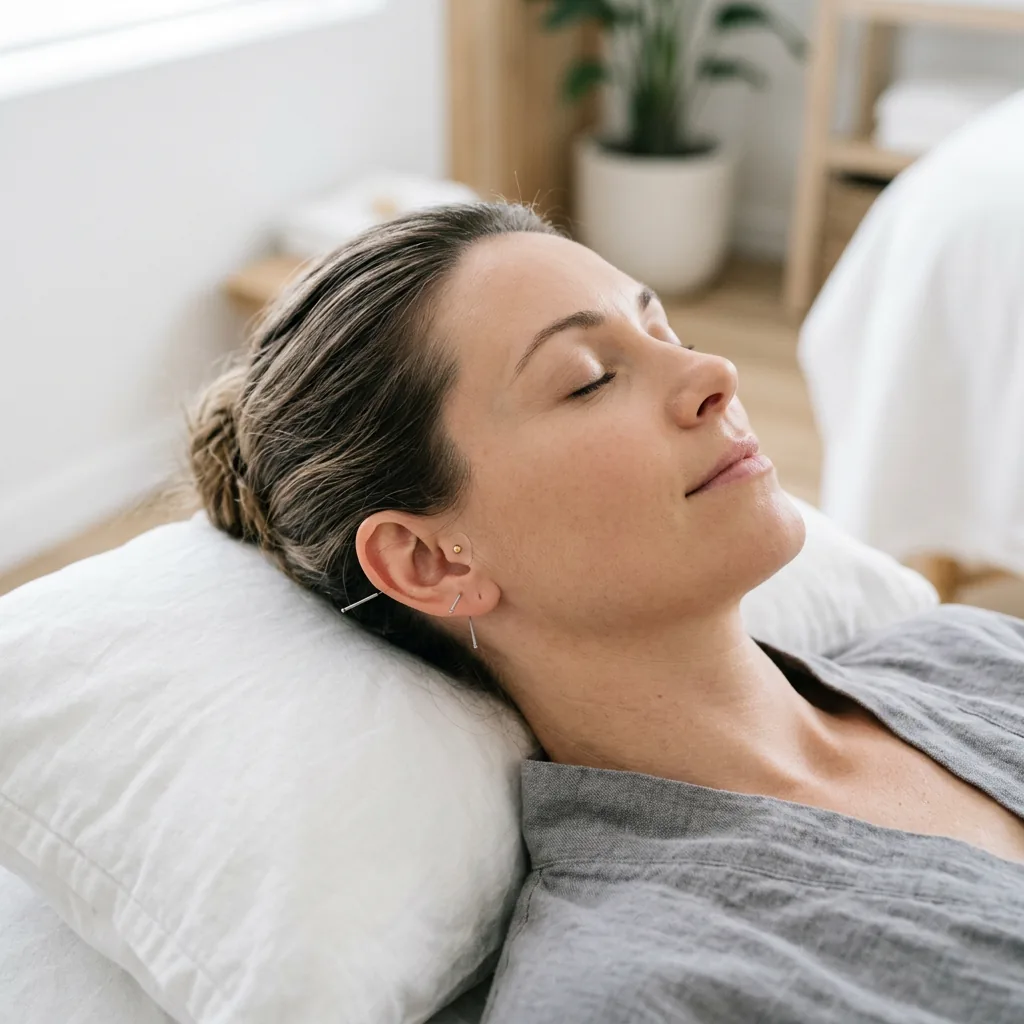
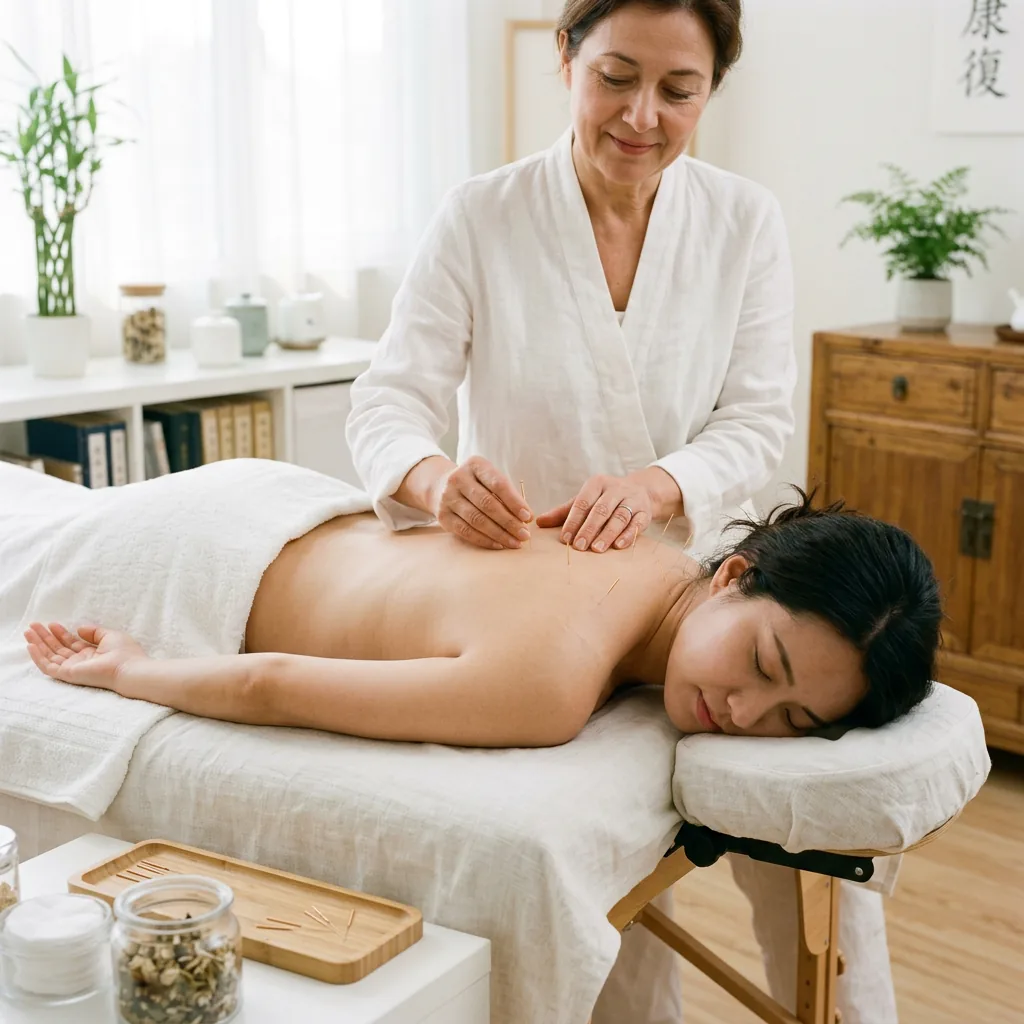
Insomnia acupuncture Manhattan patients tend to fall into a few groups: the high-stress professional whose sleep collapsed during a difficult quarter, the new parent whose sleep architecture hasn't recovered six months in, the perimenopausal woman with 3am wakes and night sweats, the older adult whose sleep has shortened gradually over years, the shift worker or frequent flyer with chronically disrupted rhythm. Our Midtown Manhattan clinic on West 57th Street — near Columbus Circle, between 9th and 10th Avenue, easy walk from Hell's Kitchen and Lincoln Square — treats all of these. The room is small, warm, and dim by design. Most patients fall asleep on the treatment table within 10 minutes. That is the response we're after.
Inside the Treatment Room

Conditions We Treat
Chronic insomnia (3+ months)
Persistent difficulty initiating or maintaining sleep, with daytime consequences. The pattern most commonly responsive to a course of sleep disorder acupuncture.
Sleep-onset insomnia (can't fall asleep)
Lying awake 45+ minutes after lights out, often with a mind that won't quiet. Frequently a heart-spleen or liver-qi pattern in TCM terms.
Sleep-maintenance insomnia (wake at 2-4am)
Falling asleep fine but waking in the middle of the night, often with racing thoughts. A common pattern of liver qi stagnation rising at the liver's TCM peak hour (1–3am).
Early-morning waking (4-5am wakes)
Waking 90+ minutes before your intended time and unable to return to sleep. Often kidney-yin pattern, common in perimenopause and chronic stress.
Non-restorative sleep
Sleeping the hours but waking unrefreshed. Suggests poor sleep architecture — light, fragmented sleep without enough deep or REM. We work on the underlying autonomic state.
Perimenopausal & menopausal sleep disruption
Night sweats, 3am wakes, racing heart. Hormone shifts collide with stress to produce a difficult pattern that often responds well to acupuncture over 8–12 sessions.
Stress-related sleep disruption
Sleep that's tracked work pressure for months. We address both — the sleep and the underlying anxious physiology.
Sleep issues during medication tapering
Patients tapering off Ambien, Lunesta, or benzodiazepines often have a rough transition. Acupuncture is a useful support during the taper, coordinated with your prescriber.
Benefits
- · Shortens time to fall asleep — often within the first 2–3 weekly sessions
- · Reduces the 3am wake-up — by addressing the liver-qi pattern that drives middle-of-night wakings
- · Improves sleep depth — more deep sleep and REM, less fragmented light sleep
- · Resets autonomic tone — the parasympathetic shift required for actual rest
- · Reduces nighttime cortisol — the hormone that keeps you wired when you should be sleeping
- · No dependency, no morning grogginess, no rebound insomnia when you stop
- · Works alongside any sleep medication, SSRI, or melatonin — no drug interaction
- · Addresses the TCM pattern (heart-spleen, liver-qi, kidney-yin) so the imbalance producing insomnia is less likely to keep reproducing it
What to Expect
- 1
Sleep intake & TCM diagnosis (20 min)
We map out exactly how your sleep is breaking down — onset, middle-of-night waking, racing thoughts, early-morning wakes, vivid dreams, daytime fatigue — then check tongue and pulse. We also review caffeine, alcohol, screen habits, and any prescription or over-the-counter sleep aids you currently use. From there we identify the TCM pattern driving the insomnia (commonly heart-spleen deficiency, liver qi stagnation rising to disturb the shen, or kidney-yin deficiency with empty heat), and explain it in plain language before any needles go in.
- 2
Session (40 min)
Acupuncture points are chosen to settle the shen (the TCM term for the mental/emotional layer that needs to quiet down for sleep) and to address your specific pattern. Most patients also get ear seeds on Shen Men and Heart points to keep working at home. You rest with the needles in for about 25 minutes — most people doze off, which is itself part of the treatment. The room is small, warm, and dim by design.
- 3
Aftercare & follow-up plan
After we remove the needles we give you brief, practical aftercare: when to take a warm (not hot) shower, what to avoid eating after 8 pm for your pattern, and a one-line breathing exercise for the bedside. We usually schedule weekly visits for 4–6 weeks, then reassess. If you're tapering off a sleep medication, we coordinate that pace with your prescribing doctor — we never ask you to stop on your own.
Sleep Acupuncture at a Glance
| What you want to know | Answer |
|---|---|
| First signs of change | Time to fall asleep often shortens within the first 2–3 weekly sessions. Most patients fall asleep on the table within 10 minutes. |
| Perimenopausal insomnia | Hormone shifts colliding with stress usually need a longer run — around 8–12 sessions before reassessing. |
| Session structure | 20 minutes of sleep intake and TCM diagnosis, then treatment. We ask about caffeine, screens and wake time, not just symptoms. |
| First-line treatment | NCCIH notes the most strongly recommended treatment for insomnia remains cognitive behavioral therapy for insomnia (CBT-I). Acupuncture works alongside it, not instead of it. |
Why patients choose Delight for insomnia
Sleep is one of the most common reasons patients come into our clinic — often as the primary complaint, often layered on top of stress, perimenopause, chronic pain, or a postpartum picture. Dr. Xaoling Shang, L.Ac. (DCAM, MSPT, MSTOM, NCCAOM-certified, 15+ years) brings a deep internal-medicine view of sleep — particularly important when insomnia is tangled up with hormonal patterns or chronic pain rather than being purely stress-driven. Dr. Yu Qi, L.Ac. (MSTOM, 7+ years) also treats sleep regularly, often as part of broader pain or post-injury care where sleep collapsed alongside the original problem.
Both practitioners are NY-licensed and bilingual (English / 中文). We coordinate freely with whoever is prescribing your sleep medication, SSRI, or hormone therapy — we never ask you to stop a prescribed medication on your own. The room itself matters more for sleep work than for almost anything else we treat: it's small, warm, dim, and quiet by design. Most patients fall asleep on the table within the first 10–15 minutes of the session, which is itself diagnostic — your nervous system showing us that, given the right cues, it can still drop into rest.
We are honest about what we cannot do. We are not a sleep medicine specialty practice. If your history suggests sleep apnea (loud snoring, witnessed apneas, excessive daytime sleepiness even after 8 hours, morning headaches), we will tell you to get a sleep study before we book a long course of acupuncture — untreated apnea will keep producing insomnia no matter what we do. For straightforward insomnia of the patterns above, acupuncture is one of the better non-pharmacological tools we have.
Frequently Asked Questions
Can I do acupuncture if I'm currently on a sleep medication?
Yes. Acupuncture has no drug interaction with sleep medications, SSRIs, or anti-anxiety drugs. We will not ask you to stop or reduce a prescribed sleep aid — that conversation belongs with the doctor who prescribed it. Once your sleep is more reliable on its own, that doctor may suggest a taper; if so, we adjust our schedule to support you through it.
How many sessions until I notice a difference?
Many patients sleep better the night of the first session — though that initial improvement often fades after a day or two. The cumulative effect (steadier onset, fewer wakings, waking up actually rested) usually builds over 4–6 weekly visits. Chronic insomnia of several years sometimes needs 8–10 visits before the new baseline is reliable. We review progress every 4 visits and adjust the plan together.
I'm a shift worker / new parent / jet-lagged frequently — can acupuncture still help?
Yes, with realistic expectations. We cannot give you a normal circadian rhythm if your schedule itself prevents one, but we can usually improve the quality of whatever sleep you do get, shorten the time to fall asleep when you finally lie down, and reduce the wired-tired feeling that builds up. For frequent flyers we'll often pair sessions with ear seeds you can press during the flight.
Will I sleep better the night of the first session?
Often yes. Many patients sleep better the night of their first insomnia acupuncture session — sometimes the best night they've had in months. The honest part: that first-night improvement often fades after a day or two as the body returns to its baseline. The cumulative, lasting change builds over 4–6 weekly visits. So if you sleep well the first night and then feel like nothing's working by night three, that's normal — it doesn't mean acupuncture isn't going to help. Stick with the course for 4–6 sessions before judging the response.
Should I take melatonin or magnesium alongside acupuncture?
Generally yes — neither interacts with acupuncture, and many of our patients use both. Low-dose melatonin (0.3–1mg, not the 5–10mg most stores sell) can help with sleep onset and circadian timing; magnesium glycinate before bed helps some people with the muscle tension layer of insomnia. Neither is a substitute for treating the underlying pattern. We'll talk through what makes sense for you specifically rather than handing you a generic supplement list.
Does insurance cover sleep disorder acupuncture?
Coverage varies. Some commercial plans cover acupuncture for any covered diagnosis, including insomnia; others limit it to chronic pain. Medicare currently covers acupuncture only for chronic low back pain, not insomnia. Call your insurance and ask about acupuncture benefits and whether insomnia is a covered diagnosis. We provide superbills for out-of-network reimbursement.
What about pregnancy or postpartum insomnia?
Both respond well to acupuncture. During pregnancy we avoid a specific set of points contraindicated in pregnancy and position you side-lying when prone is uncomfortable. Postpartum sleep disruption is one of the most common reasons new parents come to our clinic — often around the 3–6 month mark when the initial survival phase is over but sleep hasn't reset. Dr. Shang has particular experience with both prenatal and postpartum sleep work.
Research & references
Every clinical statement on this page traces back to one of these sources. They are U.S. federal health agencies and academic medical centers — not our own marketing.
NCCIH — Sleep Disorders and Complementary Health Approaches
NCCIH notes the most strongly recommended treatment for insomnia remains multicomponent cognitive behavioral therapy (CBT-I), with a small amount of low-quality evidence that relaxation techniques alone may help chronic insomnia.
NCCIH — Relaxation Techniques for Health
What the research says about progressive muscle relaxation, breathing exercises and guided imagery for stress, anxiety and sleep.
NCCIH — Mind and Body Practices
NCCIH's overview of the mind-and-body category that acupuncture, tai chi, massage and meditation belong to, and how their evidence bases differ.
Citations are summarized — please read the originals. This page is general health education, not medical advice for your specific case. Results vary, and acupuncture and Chinese medicine work best alongside, not instead of, care from your physician.
What Our Patients Say
5.0 · 23 Google reviews5.0 average across 23 verified Google reviews. Shown exactly as written.
★★★★★Amazing! After first acupuncture visit — major improvement. Added cupping and massage — results were immediate and I felt great relief from past pains. Thank you Dr. Shang.
★★★★★Highly recommended! Dr. Shang is a very skilled acupuncturist and I enjoy the treatment every time when I come here.
★★★★★Best acupuncture clinic in town! Dr. Shang is very professional and nice to everyone. I'm coming here regularly and feeling much better now!
Reclaim Your Sleep
Schedule your sleep consultation today and start sleeping better naturally.
Related Services
Anxiety & Stress Acupuncture — Find Your Calm
Living in NYC is stressful. Our anxiety and stress acupuncture treatments in Manhattan help you manage anxiety, reduce stress, and restore emotional balance—naturally. Experience deep relaxation and lasting peace.
Acupuncture in Manhattan — Holistic Pain Relief & Wellness
Experience the healing power of Traditional Chinese Medicine at our Manhattan clinic. Our licensed acupuncturists provide safe, effective treatments for pain relief, stress reduction, and overall wellness.
Chinese Herbal Medicine — Natural Healing from Within
Discover the healing power of Chinese herbal medicine at our Manhattan clinic. Our experienced practitioners create personalized herbal formulas to address the root cause of your health concerns—not just the symptoms.