Manhattan, NYC
Anxiety & Stress Acupuncture — Find Your Calm
Living in NYC is stressful. Our anxiety and stress acupuncture treatments in Manhattan help you manage anxiety, reduce stress, and restore emotional balance—naturally. Experience deep relaxation and lasting peace.
What is Anxiety and Stress Acupuncture Treatment?
Anxiety and stress acupuncture works by shifting an over-activated nervous system out of fight-or-flight. Most patients feel the shoulders drop and the breath deepen within the first 10 minutes on the table, and the cumulative effect — a steadier baseline, better sleep, less reactivity — builds over 4–6 weekly visits.
Clinic facts
- Rating
- 5.0 / 5 · 23 Google reviews
- Experience
- 15+ years · 2 licensed L.Ac.
- First visit
- 75 minutes
- Follow-up
- 45–60 minutes
- Address
- 408 West 57th Street, Suite 1K, New York, NY 10019
- Hours
- Mon–Fri 9am–7pm · Sat 9am–5pm
- Phone
- (212) 265-2052 · text (347) 875-2805
- Languages
- English · 中文
Conditions We Treat
Anxiety in NYC has a specific texture. It's the 5am wake-up with no reason. The tightness in the jaw that won't release through Sunday. The breath that won't drop below the collarbones. The wired-but-exhausted feeling that pretends to be productivity until it isn't. Most people who book anxiety acupuncture in Manhattan have already tried — therapy, breathing apps, a meditation practice that stopped working in March, possibly an SSRI, definitely a lot of coffee. They want something for the body part, because they can feel that no amount of cognitive work alone is going to release it.
Stress acupuncture works on exactly that body layer. The autonomic nervous system — the one running your heart rate, breath, digestion, and sleep without asking you — gets stuck in a sympathetic-dominant state under chronic stress. Acupuncture is one of the most reliable ways we have to shift it back toward parasympathetic tone. Patients feel it on the table: the shoulders drop, the breath deepens, often within the first 10 minutes of a session. The cumulative effect over a course is a steadier baseline — fewer panic spikes, better sleep, the ability to actually rest on a weekend without feeling like you're missing something.
Acupuncture for anxiety NYC is not a replacement for therapy, and it's not a replacement for psychiatric care when those are needed. Many of our patients are already in both. What it offers is a third channel — direct work on the body's stress physiology — that conventional mental health care doesn't address as effectively. We work alongside SSRIs, SNRIs, benzodiazepines (as needed), beta blockers, and any other medication you're on, with no drug interactions. We coordinate freely with your therapist or psychiatrist when that's useful.
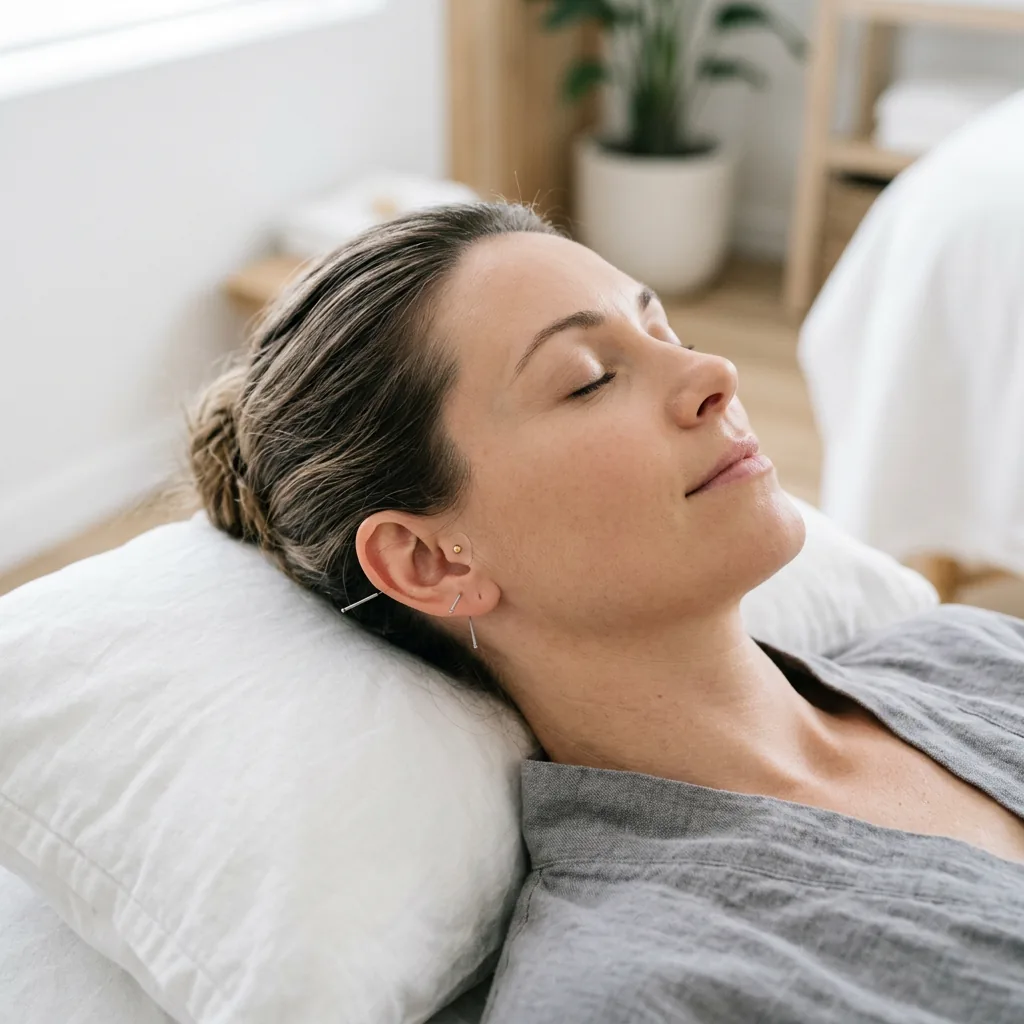
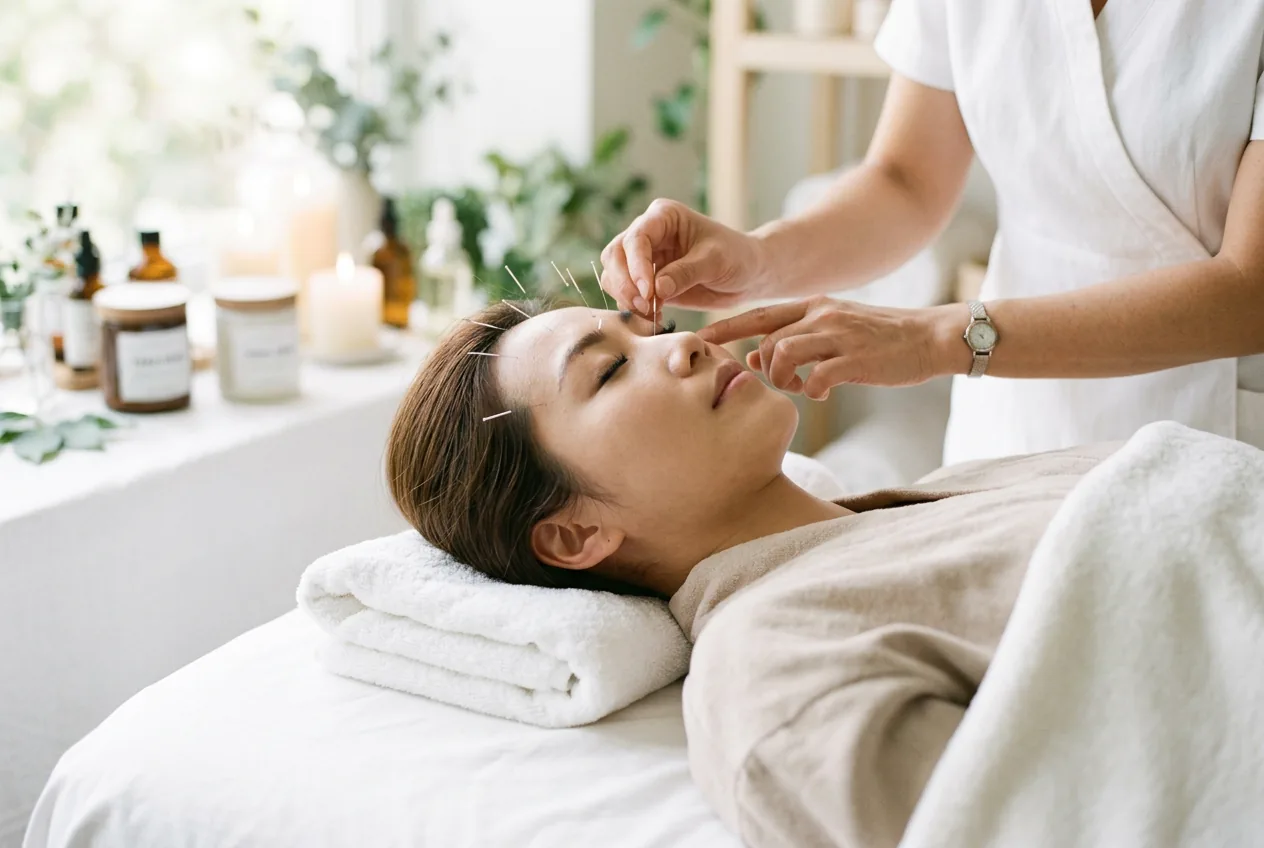
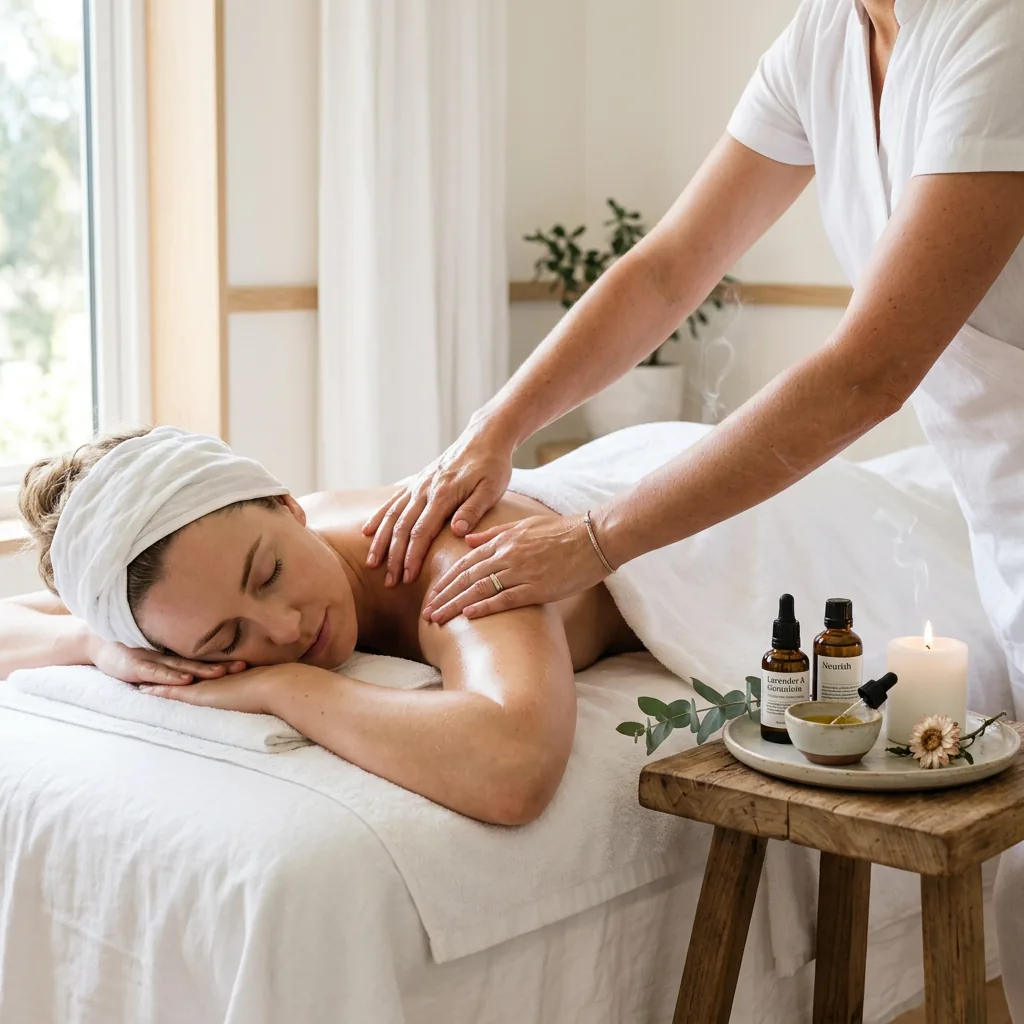
Our Midtown Manhattan clinic on West 57th Street — between Columbus Circle and Hell's Kitchen, near Lincoln Square — sees a steady stream of stressed-out New Yorkers. Finance and consulting professionals between calls. Lawyers in trial prep. Healthcare workers post-pandemic and post-everything-else. Tech workers in the layoff cycle. New parents whose nervous systems have been on alert for years. The room itself is part of the treatment — small, warm, dim, quiet. Many patients tell us they relax just walking in the door.
Inside the Treatment Room
Conditions We Treat
Generalized anxiety
Persistent worry, muscle tension, restlessness, difficulty concentrating. The pattern most commonly responsive to a course of anxiety acupuncture in Manhattan.
Work-related stress & burnout
The Midtown special — chronic deadline pressure, evening emails that don't stop, weekends that don't reset. Often paired with poor sleep and a clenched jaw.
Panic attacks
Episodes of intense fear with physical symptoms — racing heart, shortness of breath, sweating. Acupuncture between attacks helps lower the baseline reactivity that produces them.
Insomnia tied to anxiety
Difficulty falling asleep because the mind won't quiet, or 3am wake-ups with racing thoughts. We treat both layers — the sleep and the anxiety driving it.
Mild to moderate depression
Low mood, fatigue, loss of interest — often paired with anxiety. Acupuncture is an adjunct here, alongside therapy and psychiatric care where appropriate.
Stress-related digestive issues
IBS, reflux, appetite changes — the gut-brain axis in distress. Often responds well as the autonomic nervous system settles over a course of sessions.
PTSD-related hypervigilance
We work as an adjunct to trauma-focused therapy, not in place of it. Acupuncture can help lower the chronic alarm state that makes other healing work harder to integrate.
Postpartum anxiety & mood shifts
The first 12–18 months postpartum can land hard. We coordinate with your OB or perinatal psychiatrist, and Dr. Shang has particular experience here.
Benefits
- · Calms a racing mind within the session itself
- · Reduces physical signs of stress — clenched jaw, tight chest, shallow breath
- · Improves sleep onset and depth
- · Lowers cortisol response over a course of sessions
- · Works alongside therapy and SSRIs — no drug interaction
- · Drug-free, no daily medication to remember
What to Expect
- 1
Regulates Nervous System
Activates the parasympathetic nervous system (rest and digest) to calm your body's stress response.
- 2
Balances Hormones
Helps regulate cortisol and other stress hormones for improved mood stability.
- 3
Releases Endorphins
Stimulates your body's natural feel-good chemicals for lasting calm.
- 4
Improves Sleep
Addresses the root causes of insomnia for deeper, more restorative rest.
Anxiety & Stress Acupuncture at a Glance
| What you want to know | Answer |
|---|---|
| How fast you feel it | Shoulders drop and breathing deepens within the first 10 minutes for most patients. During an acute episode, many report it winding down in 10–15 minutes on the table. |
| How long until it holds | The cumulative effect — steadier baseline, less reactivity, better sleep — builds over 4–6 weekly sessions. |
| What it is not | Not a replacement for therapy or psychiatric medication. It sits alongside them, and we will say so plainly if that is what you need. |
| Between visits | Mayo Clinic's relaxation-technique guide and regular movement are the two habits that make clinic work hold. |
Why choose Delight for anxiety & stress
Anxiety and stress show up in the body before they reach the mind — the tight jaw, the held breath, the wired-but-tired feeling that won't shake on a weekend. Acupuncture works directly on that physical layer. Many of our patients come in already in therapy, sometimes on an SSRI, and use sessions here to take the edge off the body's stress response without adding another medication.
Dr. Xaoling Shang, L.Ac. (MSTOM, 15+ years) and Dr. Yu Qi, L.Ac. (MSTOM) are NY-licensed and bilingual (English / 中文). Sessions are private, quiet, and the room itself — small, warm, dim — is part of the treatment. We will refer back to a psychiatrist or therapist when something is outside our scope.
Frequently Asked Questions
Can I do acupuncture if I'm on an SSRI or anti-anxiety medication?
Yes. Acupuncture has no drug interaction. We will not ask you to stop or reduce a prescribed medication — that conversation belongs with your prescriber.
How soon will I feel calmer?
Most patients feel a noticeable drop in tension during the session itself — many fall asleep. The cumulative effect (steadier baseline, better sleep, less reactivity) usually builds over 4–6 weekly visits.
Will I cry on the table?
Some patients do — an emotional release during or after a session is common and not a problem. We have tissues, we don't talk through it unless you want to, and you'll leave when you're ready.
Is this a replacement for therapy?
No. Acupuncture works on the body's stress physiology. Therapy works on thoughts, patterns, and history. They are different tools and they work well together — most of our anxiety patients use both.
Can I come in during a panic attack?
If you can safely get to us, yes — and acupuncture during an active attack can be quite calming. We use a quieter approach: fewer needles, mostly on the hands, ears, and feet, the room darker than usual, less talking. Many patients report the attack winds down within the first 10–15 minutes on the table. If you're in a true emergency or feel unsafe, call your psychiatrist, therapist, or 911 first — we're a useful tool but not the right one when you need urgent psychiatric care.
How quickly will I feel less anxious?
Most patients feel a noticeable drop during the session itself — many fall asleep on the table, which is itself part of the response. That initial calm often lasts hours to a day or two. The cumulative effect — steadier baseline, less reactivity, better sleep — builds over 4–6 weekly sessions for most patients. Some need 8–10 sessions for the new baseline to be reliable. We review every 4 visits and adjust the plan together.
Does insurance cover anxiety acupuncture?
Coverage depends on diagnosis and plan. Some plans cover acupuncture for any covered condition; some only for specific diagnoses like chronic pain. Anxiety as a primary acupuncture diagnosis is less commonly covered than pain. The simplest check: call your insurance and ask about acupuncture benefits and whether anxiety or stress is a covered diagnosis. We provide superbills for out-of-network reimbursement.
Research & references
Every clinical statement on this page traces back to one of these sources. They are U.S. federal health agencies and academic medical centers — not our own marketing.
NCCIH — Stress
NCCIH's overview of how chronic stress affects the body and what the research says about mind-and-body approaches for managing it.
Mayo Clinic — Relaxation techniques to lower stress
Mayo Clinic's step-by-step guide to relaxation techniques — useful between sessions to extend the calm a treatment produces.
NCCIH — Mind and Body Practices
NCCIH's overview of the mind-and-body category that acupuncture, tai chi, massage and meditation belong to, and how their evidence bases differ.
Citations are summarized — please read the originals. This page is general health education, not medical advice for your specific case. Results vary, and acupuncture and Chinese medicine work best alongside, not instead of, care from your physician.
What Our Patients Say
5.0 · 23 Google reviews5.0 average across 23 verified Google reviews. Shown exactly as written.
★★★★★Amazing! After first acupuncture visit — major improvement. Added cupping and massage — results were immediate and I felt great relief from past pains. Thank you Dr. Shang.
★★★★★Highly recommended! Dr. Shang is a very skilled acupuncturist and I enjoy the treatment every time when I come here.
★★★★★Best acupuncture clinic in town! Dr. Shang is very professional and nice to everyone. I'm coming here regularly and feeling much better now!
Start Your Journey to Calm
You deserve to feel peaceful and balanced. Let us help you get there.
Related Services
Sleep Disorder Acupuncture — Restful Nights Naturally
Tired of sleepless nights? Our Manhattan acupuncture clinic helps you overcome insomnia and sleep disorders naturally—without sleeping pills or medication dependency.
Migraine Acupuncture — Freedom from Headache Pain
Tired of living with migraines? Our specialized acupuncture treatments offer proven relief for chronic headaches—naturally, without the side effects of medication.
Chinese Herbal Medicine — Natural Healing from Within
Discover the healing power of Chinese herbal medicine at our Manhattan clinic. Our experienced practitioners create personalized herbal formulas to address the root cause of your health concerns—not just the symptoms.