Manhattan, NYC
Gua Sha Therapy — Muscle Relief & Facial Rejuvenation
Experience the ancient healing art of Gua Sha at our Manhattan clinic. From therapeutic body scraping for muscle tension to gentle facial Gua Sha for natural beauty, discover the transformative power of this traditional Chinese technique.
What is Gua Sha Therapy?
Gua sha is a scraping technique using a smooth-edged tool to move stagnant circulation out of tight fascia. Body sessions run 20–30 minutes after a 5–10 minute assessment, and improve microcirculation for up to 25 minutes afterwards. Sha typically surfaces in the first 2–3 minutes; if little appears, that is diagnostic too.
Clinic facts
- Rating
- 5.0 / 5 · 23 Google reviews
- Experience
- 15+ years · 2 licensed L.Ac.
- First visit
- 75 minutes
- Follow-up
- 45–60 minutes
- Address
- 408 West 57th Street, Suite 1K, New York, NY 10019
- Hours
- Mon–Fri 9am–7pm · Sat 9am–5pm
- Phone
- (212) 265-2052 · text (347) 875-2805
- Languages
- English · 中文
What is Gua Sha?
Gua sha (刮痧) literally means "scraping sand" — the "sand" being the small red-purple speckles (called sha) that surface when stagnant blood is brought up through the capillaries. The technique itself is simple: a smooth-edged tool, lubricated with oil, is stroked firmly along the skin in one direction. The pressure breaks up fascial restriction, increases local microcirculation, and according to TCM theory, releases stagnant qi and blood. A 2007 study in Pain Medicine showed measurable improvements in microcirculation lasting up to 25 minutes after a single treatment, and a 2011 trial in The Journal of Pain reported significant relief for chronic neck pain.
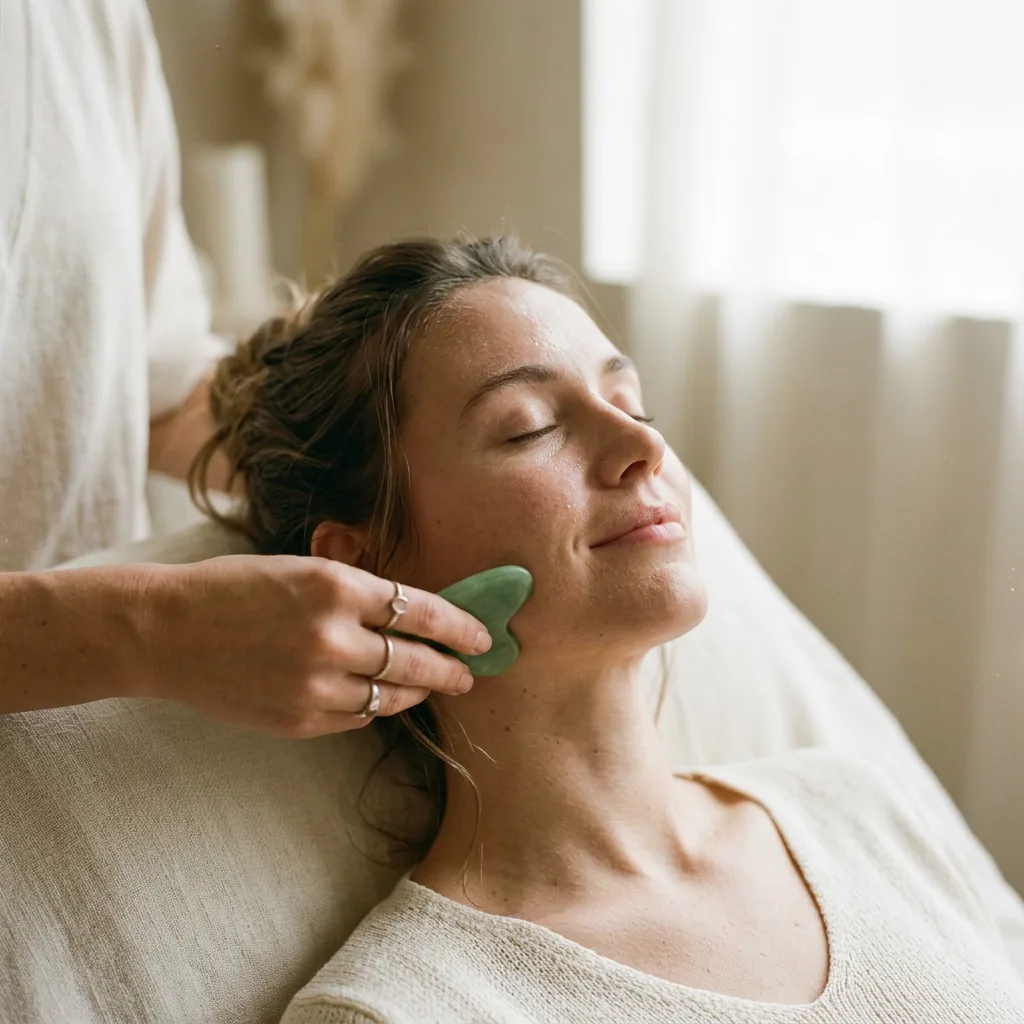
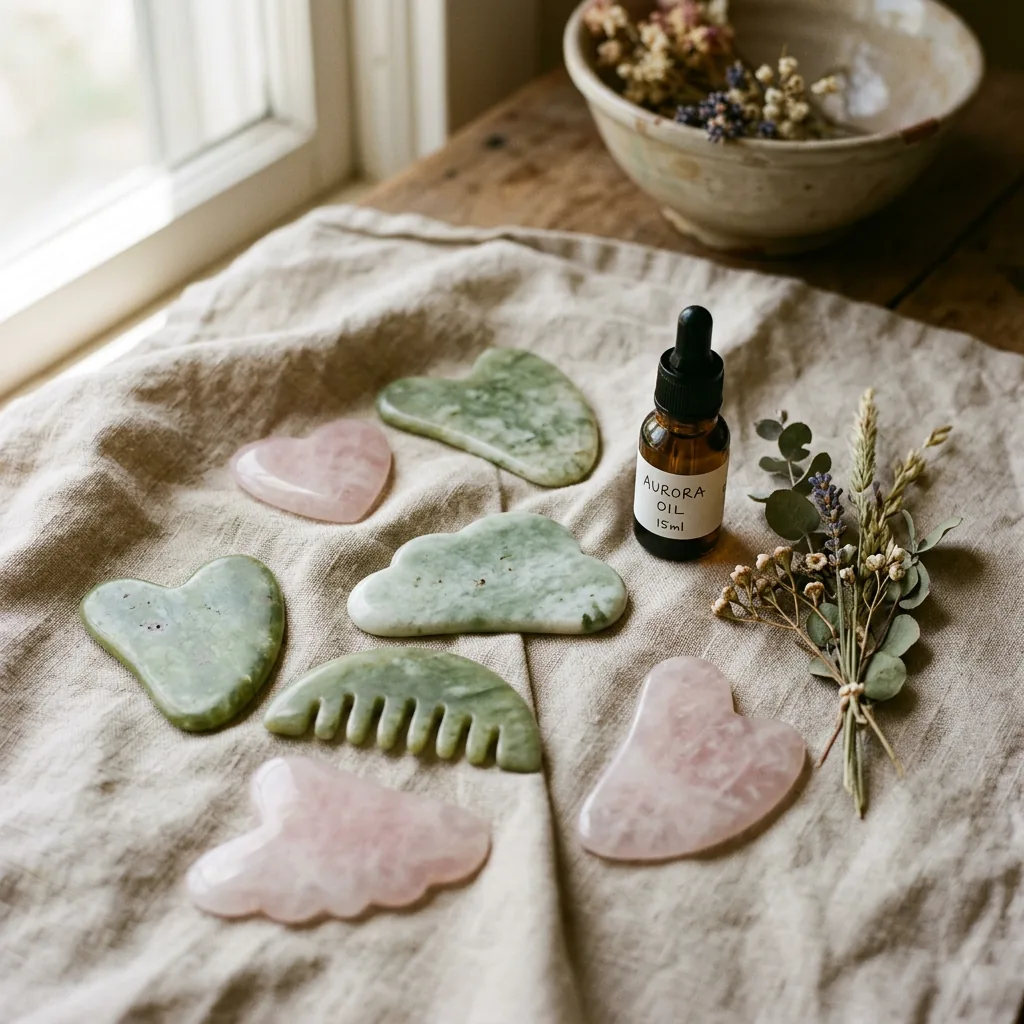
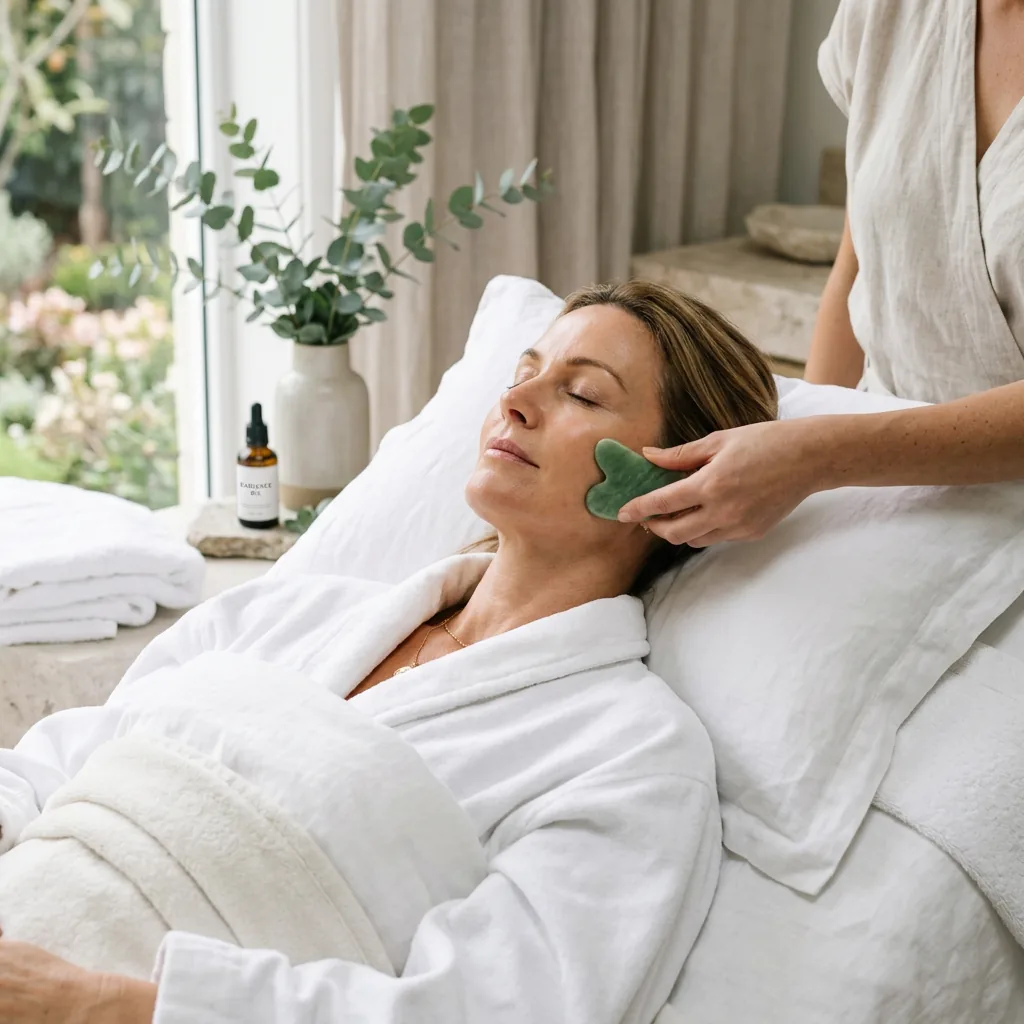
At our Manhattan clinic we run gua sha as two genuinely different services. Therapeutic body gua sha uses water-buffalo horn or ceramic tools with firm pressure on the upper back, neck, IT bands, and large muscle groups — the goal is to bring up sha and decompress tissue that's been gripping. Facial gua sha uses rose quartz or jade tools at maybe a tenth of that pressure, with completely different goals: lymphatic flow, jaw and brow release, mid-face contour. The two are not interchangeable, and the same tool isn't used for both.
Patients walking into our 408 West 57th Street clinic for body gua sha are typically managing chronic neck and shoulder tension from desk work, persistent upper-back tightness from long commutes from the Upper West Side or across the Hudson, post-workout stiffness in marathoners and CrossFitters, or the early-cold pattern where the upper back feels tight and the patient is just starting to come down with something. Patients coming for facial gua sha are typically pairing it with cosmetic acupuncture for puffiness, jaw tension from clenching, mid-face contour, or just maintenance between Mei Zen courses.
Dr. Yu Qi (MSTOM, L.Ac., 7+ years acupuncture, 10+ years bodywork) handles most of the body gua sha and facial gua sha work at our Midtown clinic. Both forms are typically done as part of a broader treatment plan — gua sha on its own is rarely the best use of your visit; combined with acupuncture in the same hour, it often is.
Inside the Treatment Room
Conditions We Treat
Chronic neck & upper-back tightness
The most common body gua sha case — desk-job tension along the trapezius and levator scapulae.
Early-stage colds (wind-cold pattern)
Classical TCM use: gua sha on the upper back within 24-48 hours of onset to release the pathogen.
Migraines & tension headaches
Light gua sha along the suboccipitals and upper traps where many headaches originate.
IT band & lateral leg tightness
Common in runners and cyclists; firm one-direction strokes along the IT band.
Facial puffiness & lymphatic stagnation
Light rose-quartz or jade strokes guiding lymph from the midline outward and down.
Jaw tension & TMJ clenching
Targeted facial gua sha along the masseter and around the TMJ.
Mid-face contour & under-eye puffiness
Pairs naturally with Mei Zen cosmetic acupuncture; visible same-day effect on puffiness.
Brow tension from screen use
Specific to long-screen workers and chronic squinters.
Benefits
- · Releases chronic upper-back and neck muscle tension
- · Reduces inflammation and pain
- · Improves microcirculation for up to 25 minutes post-session
- · Breaks up adhesions and softens scar tissue
- · Relieves tension-type headaches when applied to the suboccipitals
- · Reduces facial puffiness and under-eye fluid
- · Promotes lymphatic drainage along the jaw and neck
- · Improves skin tone and microcirculation in the face
- · Visible jaw-contour and mid-face lift effect immediately after a session
- · Stacks naturally with acupuncture or Mei Zen cosmetic acupuncture
What to Expect
- 1
Assessment (5-10 min)
We ask what hurts or what you want to address — desk-tension upper back, persistent migraine pattern, jaw clench, facial puffiness — and palpate the area. Based on that we pick the right tool (water-buffalo horn or ceramic for body, rose quartz or jade for face) and the right pressure.
- 2
Body gua sha (20-30 min)
You lie face-down on a heated table. Oil goes on, then firm one-direction strokes along the muscle and meridian. Most patients feel a strong, sometimes intense scrape that releases as the sha comes up. We check pressure as we go. Sha typically surfaces within the first 2-3 minutes if there's stagnation; if not much comes up, that's diagnostic too.
- 3
Facial gua sha (20-30 min)
If facial work, the pressure is approximately one-tenth of body work — barely above skin contact. Strokes follow lymph paths from the midline outward and down toward the clavicles. No sha appears on the face (that's not the goal there). Many patients see visible jaw and under-eye changes by the time they sit up.
- 4
Aftercare
Body sha fades in 3-7 days, occasionally 10. Drink water afterward, avoid hot showers and alcohol the same day, and skip the gym for 24 hours if a large area was treated. Cover the marks if you're heading back into cold weather. Facial gua sha leaves no marks — you can apply makeup an hour later if needed.
Gua Sha Therapy at a Glance
| What you want to know | Answer |
|---|---|
| Session structure | 5–10 minute assessment, then 20–30 minutes of body gua sha. |
| Circulation effect | Microcirculation stays improved for up to 25 minutes after the session. |
| Reading the sha | Sha usually surfaces within the first 2–3 minutes where there is stagnation. Where little appears, that tells us something too. |
| Body versus face | Body gua sha is firm and leaves temporary marks. Facial gua sha is light, sculpting work and does not. |
Why choose Delight for gua sha
Body gua sha and facial gua sha are different treatments and we treat them that way. Dr. Yu Qi uses water-buffalo horn and ceramic tools with a firmer angle for upper-back and neck tension, while facial work uses rose quartz or jade at a much lighter pressure — the goal there is lymphatic flow and contour, not 'sha'.
Gua sha is most useful as part of a treatment plan rather than a one-off. For chronic neck and shoulder tightness we often combine it with acupuncture in the same visit; for facial work it pairs naturally with the Mei Zen cosmetic acupuncture course.
Frequently Asked Questions
Why am I bruised? I thought it wasn't supposed to hurt.
Those red-purple marks are 'sha' — pooled stagnant blood being released from the tissue, not impact bruising. They are not tender to the touch (unlike a real bruise), and fade in 3-7 days. They are the point of body gua sha, not a side effect. If we didn't bring up any sha, that would mean either the pressure was too light or there wasn't much stagnation there in the first place.
Can I do facial gua sha at home?
Yes, and many of our patients do. We're happy to show you the basic strokes after a session — direction from midline outward, light pressure, always with oil or serum so you're not dragging skin. Daily 5-minute home practice combined with periodic in-clinic sessions works well for most people. Don't try at-home body gua sha without training — wrong angle or pressure on the wrong tissue can cause real harm.
Can I do facial gua sha if I have Botox or fillers?
Wait 2 weeks after Botox and 2-4 weeks after fillers before facial gua sha. The light pressure is unlikely to displace product, but we like to give the tissue time to settle. After that window, facial gua sha actually pairs well with injectables — it supports lymphatic flow and reduces post-injection puffiness.
Will the marks last?
Body sha marks fade in 3-7 days for most patients, occasionally up to 10 days if the area was very stagnant. Facial gua sha leaves no marks at all. If you have an event coming up that shows shoulders or upper back, schedule body gua sha at least 10 days ahead — or ask us to use lighter pressure that session.
Will I be sore afterward?
Body gua sha usually leaves you feeling looser, not sore. Some patients feel a mild warmth or fatigue for a few hours — drink water and avoid hot showers that day. Facial gua sha causes no soreness at all. If you ever feel actual pain (not just tenderness) the day after body work, tell us at your next visit so we can adjust pressure.
Is gua sha safe during pregnancy?
Facial gua sha — yes, after the first trimester, with light pressure. Body gua sha — we avoid the abdomen, lower back, and certain points throughout pregnancy. Light upper-back work for cold-prevention is usually fine after week 12. Tell us if you're pregnant when you book.
How often should I get gua sha?
Body: wait until marks fade — typically a week — before re-treating the same area. For chronic neck/upper-back tightness, every 2-3 weeks during a flare and monthly for maintenance. Facial: every 1-2 weeks is reasonable; daily light home practice can fill the gap.
Research & references
Every clinical statement on this page traces back to one of these sources. They are U.S. federal health agencies and academic medical centers — not our own marketing.
NCCIH — Traditional Chinese Medicine: What You Need To Know
Studies suggest acupuncture stimulates the release of the body's natural painkillers and affects brain areas involved in processing pain; results suggest it may help chronic low-back pain, neck pain, knee osteoarthritis and carpal tunnel syndrome.
NCCIH — Massage Therapy: What You Need To Know
A 2013 review of 12 studies (757 participants) found massage more helpful than inactive therapies for neck and shoulder pain; a 2016 review of 4 U.S. studies (519 participants) found massage can give short-term neck-pain relief when sessions are long and frequent enough.
NCCIH — Cupping (safety information)
NCCIH's cupping fact sheet is safety-focused: cupping leaves temporary marks, can cause skin discoloration or burns, may worsen eczema or psoriasis, and equipment must be sterilised between patients. It makes no effectiveness claims.
Citations are summarized — please read the originals. This page is general health education, not medical advice for your specific case. Results vary, and acupuncture and Chinese medicine work best alongside, not instead of, care from your physician.
What Our Patients Say
5.0 · 23 Google reviews5.0 average across 23 verified Google reviews. Shown exactly as written.
★★★★★Amazing! After first acupuncture visit — major improvement. Added cupping and massage — results were immediate and I felt great relief from past pains. Thank you Dr. Shang.
★★★★★Highly recommended! Dr. Shang is a very skilled acupuncturist and I enjoy the treatment every time when I come here.
★★★★★Best acupuncture clinic in town! Dr. Shang is very professional and nice to everyone. I'm coming here regularly and feeling much better now!
Experience the Power of Gua Sha
Book your Gua Sha session today—whether for pain relief or natural beauty.
Related Services
Cupping Therapy in Manhattan — Hands-on Relief for Back, Neck & Shoulder Tension
Cupping is one of the most-requested treatments at our 57th Street clinic. Dr. Xaoling Shang, L.Ac. (MSTOM, NCCAOM-certified, 15+ years in practice) uses both traditional fire cups and modern vacuum cups, choosing the method that fits your body and what you came in for.
Facial Acupuncture in NYC
Natural Facial Rejuvenation, Manhattan
Tui Na Massage — Chinese Medical Massage Therapy
Discover Tui Na (推拿)—the therapeutic massage system of Traditional Chinese Medicine. More than relaxation, Tui Na is a powerful healing modality that treats musculoskeletal conditions, relieves pain, and restores balance to your body.